Can Torrance County's proposed zoning rules reach what you already have?

A legal analysis of the 2026 zoning revision and grandfathered uses
Commissioner Linda Jaramillo asked the question many Torrance County residents will be asking regarding the planned changes to the county's zoning ordinances.
During the Torrance County Board of County Commissioners meeting on Wednesday, October 14, 2026, Planning and Zoning Director Don Goen described a property where code enforcement had found about 150 roosters. Under the zoning revision Goen was presenting, more than 24 poultry would count as commercial activity. Jaramillo asked whether an owner would be grandfathered in.
"No, no, no. We're not going to allow that," Goen said. "Just because there wasn't something in there that says that you can't doesn't mean we're going to say you can."
Whether a new law can reach something that already exists is one of the oldest questions in jurisprudence. In New Mexico, as in most states, the general answer is that a use that was lawful before a zoning change may usually continue as a "nonconforming use," though local governments may limit it, prevent it from growing, and in some cases phase it out over time. Torrance County's own zoning ordinance, in a section the 2026 revision leaves untouched, says the same thing.
This article explains what the proposed revision would change, how New Mexico law treats rules that reach existing uses, and how those principles apply to the specific changes residents are most likely to feel. Commissioners voted 3-0 to publish the draft. A public hearing and possible adoption vote is scheduled for Thursday, November 12, 2026.
This article discusses general legal principles and is not legal advice. Residents with questions about their own property should consult an attorney licensed to practice law in the State of New Mexico. As this article is driven by analysis, it includes the writer's opinion as to the nature of the law, and should not be considered a purely objective writing.
What the revision would change
The current Torrance County Zoning Ordinance was adopted in 1990 and last amended on November 13, 2024. Goen described the proposed 2026 revision as an act of cleanup and modernization, although there are actually significant changes to the substance of what residents would be permitted to do on their property. Much of the redlined changes to the zoning ordinance replace the word "district" with "zone" throughout the ordinance. But a number of changes go beyond "cleanup and modernization," and would affect what residents can keep, build, and live in. Several of these proposed changes were not disclosed at the county commission meeting.

Poultry. No household could keep more than 24 poultry "in any combination." A turkey or goose counts as two chickens or ducks, so a household could keep 12 turkeys, 24 chickens, or a mix. "More than 24 poultry will constitute commercial activity and may require a Conditional Use permit." The current ordinance defines poultry but sets no number.
Used mobile homes. The current ordinance bars installing a mobile home "manufactured before the current federal HUD standard (1976 as of this printing)." The county has applied that as a 1977 cutoff. The revision would bar installation of any mobile home "older than 30 years" anywhere in the county's jurisdiction. Because the cutoff is tied to age, not a fixed year, it moves forward one year every year.
Sheds. A new provision states that sheds "are not intended for use as a dwelling" and that "living in a shed will not be permitted" unless the Construction Industries Division (CID) approves plans to convert it or the shed is built to full residential standards. It sets a penalty of up to $300, up to 90 days in jail, or both.
Cannabis. Two new provisions, one in the general provisions (Section 6) and one in the conditional use section (Section 21), would allow only one state-issued cannabis license per parcel, require growers to disclose their plant count, tie facility size to that count (500 mature plants would allow 1,750 square feet, up to 70,000 square feet for 20,000 plants), and require Planning and Zoning Board approval to change either number. Violations "may result in revocation" of the conditional use permit.
Water for hauled-water properties. On-site storage systems for properties without a well could be designed by a licensed contractor, not only by a licensed engineer or architect.
Flood zones. Builders in a special flood hazard area would have to provide a post-construction elevation certificate within one year or face the ordinance's standard penalty of up to $300 and 90 days in jail.
Domestic wells. When the county weighs a proposed use's effect on water supplies, "individual domestic wells will not be considered to be an impairment of prior existing water uses."
Livestock equivalency. One horse or cow would equal five goats or five sheep, up from three. That loosens the limit for goat and sheep owners on small lots.
Feedlots and kennels. Feedlots would need to be on land with less than a 5% slope, at least 100 feet from any waterway, with a 25-foot filter strip. Small feedlots (20 to 100 head) and medium feedlots (101 to 200 head) would require a conditional use permit, and large feedlots would be allowed only in a Special Use District. The current rule that a small feedlot be "centered on at least 100 acres" would be deleted. Kennels would be defined as residential (six to nine dogs or cats), commercial (10 or more), or foster and rescue (10 or more).
Mailed notice. The county would stop sending certified mail for owner-initiated zone changes and would no longer mail individual notices for county-initiated, countywide changes. More on that below.
Changes in the redline that were not discussed
A review of the reference sheet found these additional changes:
- Pigs in Agricultural Preservation zones. The words "excluding pigs" would be struck from the permitted livestock use in the AP-5, AP-10, and AP-40 zones, which would allow pigs there. The separate exception for animals raised by 4-H and Future Farmers of America members would no longer need to mention pigs, and the words "including pigs" would be struck from it.
- Adult land uses. The current ordinance says that if the commission does not decide an adult land use application within 60 days, the application "will be approved and issued as a matter of law." That language would be deleted and replaced with a requirement that the commission hear the application at its next regular meeting after the 15-day notice period. The Zoning Board would give an oral recommendation instead of a written one within seven days.
- Permit revocation notice. The commission could still revoke a permit after written notice and a hearing, but the words "at least 10 days" would be struck, meaning a permit could be revoked immediately, without notice.
- Zoning Board "decisions." For Solid Waste and Special Use districts, the Zoning Board's "recommendation" to the commission would become a "decision," transmitted after a 14-day appeal period. The commission would still review it.
- Bed and breakfasts. Small bed and breakfasts in the Conservation, Agricultural, and Rural Community Preservation zones would be limited to eight guests, in addition to the existing two-bathroom limit.
- Commercial processing. In the Agricultural Preservation zones, the conditional use for "large-scale commercial processing of agricultural products" would become "commercial processing," which would bring smaller processors under the permit requirement.
- Sign removal. In cases where signs are used for, say, a public notice of a permit application or a variance application, Planning and Zoning, not the applicant, would remove required public notice signs after a decision.
- Water agency review. The 45-day period for state and local agencies to comment on a project's water effects would be deleted. Agency comments would be considered only if they arrive.
- Zoning maps. Maps and the official ordinance would be kept by the Planning and Zoning Office and the GIS Office instead of the County Clerk.
Drafting problems residents may want to raise
The redline contains several internal inconsistencies that commissioners could address before adoption:
- Wrong ordinance number. The new provisions are tagged with the 2024 ordinance number rather than a 2026 number.
- "Zone" or "district." The revision's stated goal is to separate zones from districts, yet the feedlot definition allows large feedlots only "in a special use district" in one place and "in a special use zone" in two others.
- The 201st animal. A large feedlot is defined as "201+ head," but the Special Use District section lists large feedlots as "more than 201 head," leaving a 201-head operation in neither category.
- Two cannabis sections. Section 6 refers to "one State issued cannabis grow and or production license per parcel," while Section 21 says "production and or manufacturer license." Section 6 includes a 200-plant example that Section 21 omits.
- A missing word. Goen caught a typo in the opening clauses: the 2024 ordinance "did not adequately [address] cannabis operations."
Can a new zoning rule be used to prohibit what already exists?
“It is settled, by decisions of this Court so well known that their citation may be dispensed with, that any statute which punishes as a crime an act previously committed, which was innocent when done ... is prohibited as ex post facto.” – Justice Harlan Stone, Beazell v. Ohio, 269 U.S. 167, 169 (1925).
Three separate legal ideas tend to get lumped together as "retroactive zoning."
The first is a law that punishes conduct after the fact. The US Constitution and the New Mexico Constitution both forbid ex post facto laws, but courts apply that ban only to criminal punishment. No one could be fined today for keeping 30 chickens last year, before a cap existed.
The second is a law that changes the rules, going forward, for a situation that exists today. That is how most zoning changes work, and it is generally allowed, subject to protections for existing uses described below. New Mexico's statutory construction act presumes that state statutes and rules operate "prospectively only unless the statute or rule expressly provides otherwise." NMSA § 12-2A-8 (1997). The 2026 draft says nothing about applying to existing uses.
The third is the protection the law gives to a use that was lawful when it began.
Nonconforming uses: the grandfather rule
New Mexico courts define a nonconforming use as "a use that lawfully existed prior to the enactment of a zoning ordinance prohibiting such a use." KOB-TV, L.L.C. v. City of Albuquerque, 2005-NMCA-049, ¶ 12, 137 N.M. 388, 111 P.3d 708 (2005) (link to case). When a use is lawfully underway before a restriction takes effect, "the government may not immediately terminate the use." Id.
That protection has limits:
- The use must actually exist. "A mere intention or an unimplemented usage is insufficient to create a prior existing use." City of Las Cruces v. Huerta, 1984-NMCA-120, 102 N.M. 182, 692 P.2d 1331 (1984) (link to case). Planning to buy more birds or a second cannabis license is not enough.
- The owner must prove it. "The burden of proof is upon the party asserting the existence of the non-conforming use." Id.
- The use must have been lawful. A use that already violated another law, such as a building code, does not become protected because a zoning rule now addresses it.
- It is not permanent. "A property owner does not have a vested right in a particular zoning classification," and nonconforming uses may be restricted when "reasonably necessary to the protection of the health, safety, morals, and general well being of the people." KOB-TV, 2005-NMCA-049, ¶ 16, quoting Swink v. Fingado, 115 N.M. 275, 291, 850 P.2d 978 (1993)).
A local government may also phase out a nonconforming use by granting a property owner a set grace period to come into compliance. New Mexico courts have upheld amortization - imposing this grace period - where the period is reasonable, weighing the public benefit against the owner's loss, the nature of the use, the owner's investment, and how long the use has existed. KOB-TV, 2005-NMCA-049, ¶¶ 33-36, citing Temple Baptist Church, Inc. v. City of Albuquerque, 98 N.M. 138, 646 P.2d 565 (1982). In KOB-TV, the Court of Appeals sent a one-year deadline back to the city because nothing showed the city had weighed the station's losses.
The 2026 draft contains no amortization schedule for any of its new limits.
A related doctrine, vested rights, protects someone who received government approval and then substantially changed position in reliance on it, such as by building. New Mexico requires both an approval and "a substantial change in position" in reliance on it. Brazos Land, Inc. v. Bd. of Cnty. Comm'rs of Rio Arriba Cnty., 115 N.M. 168, 170, 848 P.2d 1095 (N.M. Ct. App.) (1993) (link to case). Once rights vest, they "cannot thereafter be withheld, extinguished or modified except upon due process of law." KOB-TV, 2005-NMCA-049, ¶ 39 (quoting El Dorado at Santa Fe, Inc. v. Bd. of Cnty. Comm'rs of Santa Fe Cnty., 89 N.M. 313, 319, 551 P.2d 1360 (1976)).
Torrance County's ordinance already has a grandfather clause
Torrance County does not need to rely on case law alone. Section 20 of its zoning ordinance, which the revision does not change, addresses the question directly:
"Within the zones established by this Ordinance, there exist: lots, structures, or uses of land or structures which were lawful before this Ordinance was passed or amended, but would be prohibited or restricted under the terms of this Ordinance. It is the intent of this Ordinance to allow these nonconformities to continue until they are removed, but not to encourage their survival."
The rest of Section 20 sets out how that works:
- The Zoning Director identifies nonconformities and issues a Certificate of Nonconformance. After receiving written notice from the director, an owner has 60 days to obtain one.
- A nonconforming use "may be continued under the Certificate of Nonconformance," and the right transfers to a buyer along with the certificate. The ordinance itself says such a use "may also be referred to as a 'grandfathered use.'"
- A nonconforming use "shall not be enlarged, expanded, or extended."
- If a nonconforming use or structure is damaged by more than 50% of its replacement cost, it must be rebuilt for a permitted use, with a possible exception for single-family homes approved by the Zoning Board and the New Mexico Environment Department.
- A nonconforming use that is discontinued or abandoned for one year or more cannot be reestablished. Dry land and irrigated farmland are exempt from this rule.
In other words, the county's own ordinance generally answers Jaramillo's question with a qualified yes, for uses that were lawful before the amendment takes effect.
How the rule applies to each change
Poultry
The roosters Goen described are not a test of the new cap. According to Goen, the county told that owner to reduce his flock months ago, under the current rules, and he did. Whatever authority the county relied on then, the owner no longer has 150 roosters to grandfather.
The more common case will be a household that has, say, 40 laying hens when the revision takes effect. Under the current ordinance, which sets no poultry limit, that flock appears to be lawful unless it already violates some other rule. Under Section 20, it would appear to qualify as a nonconforming use that could continue but could not grow.
Several practical questions follow. Chickens die and are replaced. A court could treat replacing birds within the same flock size as continuing the use, or it could treat new birds as an expansion. The abandonment rule would also matter: a household that lets its flock lapse for a year could lose the protection. The draft says more than 24 birds "may require" a conditional use permit, so it does not say clearly when a permit is required, which leaves room for discretion either way.
Grandfathering under zoning does not override other laws. Nuisance, animal welfare, and animal fighting laws apply regardless of when a flock started.
Used mobile homes
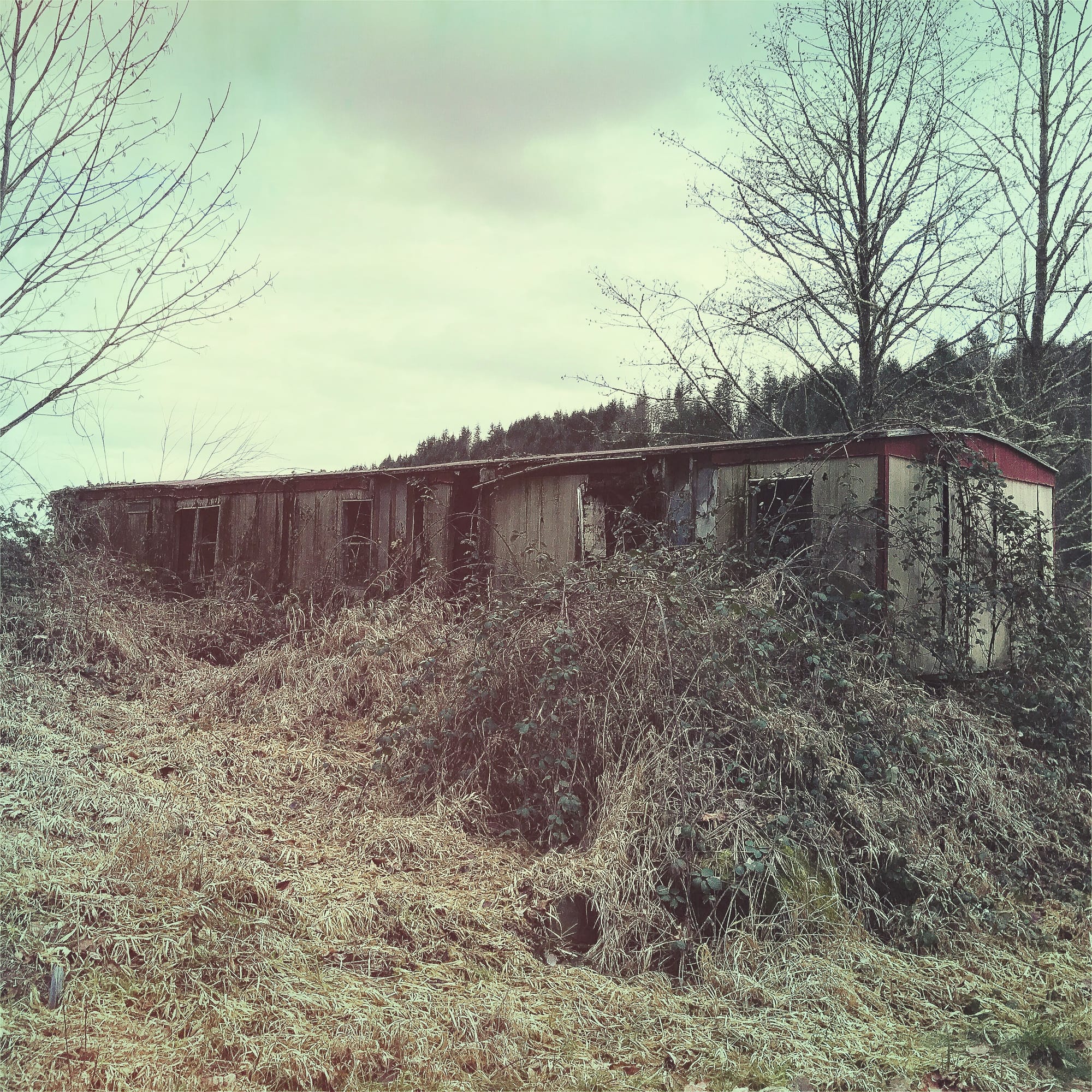
The mobile home rule governs installation: "No mobile home older than 30 years shall be installed anywhere in the jurisdiction of Torrance County." A mobile home already installed is not being installed again. On its face, the rule would not require anyone to remove a home already in place.
The rule would matter in three situations:
- Moving a home. An owner who moves an older home to a new lot, even within the county, would appear to be installing it and would be subject to the 30-year limit.
- Selling a home. A buyer who wants to move an older home to a different property would face the same limit. A home sold in place may be treated differently, but the draft does not say.
- Disaster. If a nonconforming structure is damaged by more than 50% of its replacement cost, Section 20 requires rebuilding for a permitted use. Whether a fire-damaged 1985 home could be replaced with another home of the same age would depend on how the county reads that provision.
Two legal questions could shape the mobile home rule.
The first is federal. The National Manufactured Housing Construction and Safety Standards Act gives HUD authority over how manufactured homes are built. The Tenth Circuit Court of Appeals, whose rulings bind federal courts in New Mexico, has held that the act does not preempt a town rule barring installation of manufactured homes more than 10 years old. Schanzenbach v. Town of Opal, 706 F.3d 1269 (10th Cir. 2013) (link to case). A federal challenge to Torrance County's 30-year rule would face that precedent.
The second is a state statute. New Mexico bars any local government or planning and zoning agency from excluding multi-section manufactured homes built to HUD standards from a district where site-built single-family homes are allowed, or from placing "more severe restrictions" on them than on site-built homes. See NMSA § 3-21A-3 (1987). The statute allows local governments to apply the same non-construction requirements and historic or aesthetic standards to both. Torrance County applies no age limit to site-built homes. Whether an age cutoff for multi-section manufactured homes is a "more severe restriction" under that statute does not appear to have been decided by a New Mexico appellate court. The statute does not cover single-section homes.
Sheds
Goen told commissioners that living in sheds is already not allowed, and that the county has had to cite other laws, such as state building codes, to stop it. If that is correct, a shed occupied as a dwelling without CID approval was not a lawful residential use before the revision, and the nonconforming use doctrine would not protect it. The new provision mainly puts an existing restriction into the zoning ordinance and attaches the ordinance's penalty to it.
Goen said the county has encountered families, including children, living in buildings without sanitation. Enforcement against an occupied dwelling raises different concerns than enforcement against a flock of chickens. The draft does not say whether the county would give occupants time to relocate or bring a structure up to code.
Cannabis
Goen said the county has about eight active cannabis operations and no new applications in more than a year. For those eight, the most important rules are that each parcel may hold only one state license, and that any change in plant count or building size requires Planning and Zoning Board approval.
An existing operation that holds more than one license on a parcel, or occupies more space than its plant count would allow, would appear to be a nonconforming use under Section 20. It could continue but could not expand. Because those operations already hold conditional use permits, they may also have vested rights tied to those approvals. Under KOB-TV, a vested right cannot be extinguished without due process.
That is why the deletion of the 10-day minimum notice before permit revocation matters. Under the current ordinance, a permittee must receive "at least 10 days written notice of the specific charges" before the commission can revoke a permit. The draft keeps the requirement of written notice and a hearing but removes the 10-day minimum. Due process requires notice and a meaningful opportunity to be heard, and how much time that requires depends on the circumstances. A specific minimum gives permittees a clear floor, and the draft removes it.
Wells, water systems, and flood certificates
The domestic well, water storage, and elevation certificate changes apply to future permits and future land use reviews. They do not reach back to existing uses. The elevation certificate rule applies to development permits issued after the revision takes effect.
The domestic well change could affect neighbors' arguments in future land use cases. When the county reviews a large water user, such as a commercial operation, neighbors could no longer count new domestic wells as an impairment of existing water uses. Goen said the intent is to keep one homeowner from blocking a neighbor's house over a well. State law requires the State Engineer to issue domestic well permits when the statutory requirements are met.
Pigs, livestock, and feedlots
Some changes make the ordinance less restrictive for existing owners. Striking "excluding pigs" from the Agricultural Preservation zones would allow pigs where they are now barred. Raising the goat and sheep equivalency from three to five per animal unit lets owners keep more small livestock on the same land. Removing the 100-acre requirement for small feedlots would open smaller parcels to feedlots, subject to the new slope, waterway, and conditional use requirements.
A new feedlot rule could affect an existing operation that sits within 100 feet of an arroyo or on a steeper slope. Under Section 20, such an operation would appear to be nonconforming and could continue but not expand.
Notice and procedure
Two procedural questions could matter before November 12.
Notice for a countywide revision. New Mexico requires a public hearing before any zoning regulation takes effect, with notice published at least 15 days before the hearing. See NMSA § 3-21-6(B) (1981). The individual mailed notices required by that statute do not apply to a comprehensive, countywide ordinance, which needs only published notice of the ordinance's title and a general summary. Miles v. Bd. of Cnty. Comm'rs of Sandoval Cnty., 1998-NMCA-118, 125 N.M. 608, 964 P.2d 169 (N.M. Ct. App. 1998) (link to case). The revision's new language exempting county-initiated, countywide changes from mailed notice is consistent with that ruling.
Notice for a single zone change. The revision would also change notice when a property owner asks to rezone an area of one block, or five acres, or less. Under the current ordinance, the county must send that notice by certified mail, return receipt requested, to owners in the area and within 100 feet. The draft would switch to first-class mail. State law still requires certified mail, return receipt requested, when "a change in zoning is proposed for an area of one block or less." NMSA § 3-21-6(B). A county ordinance cannot require less than the statute requires (just as, under US Constitutional Law, the Preemption Doctrine bars state law from imposing fewer restrictions than federal law). See Hughes v. Talen Energy Mktg., LLC, 136 S.Ct. 1288, 1297 (2016) (link to case). As drafted, that part of the revision appears to conflict with state law, though the county would still be bound to follow the statute.
What residents can do
The draft ordinance and reference sheet are public records in the October 14, 2026, meeting packet. Copies can be requested from the County Manager's Office, 205 South Ninth Street, Estancia, or by calling (505) 544-4700.
Residents who already have more than 24 poultry, more than one cannabis license on a parcel, an older mobile home they may need to move, or another use the revision would restrict may want to document that use before the revision takes effect. Dated photographs, feed and veterinary receipts, permits, and purchase records are the kinds of evidence that can show a use existed. Under New Mexico law, the person claiming a nonconforming use carries the burden of proving it.
Residents can ask the Planning and Zoning Department how the county intends to handle existing uses, and whether it will issue Certificates of Nonconformance. They can also comment at the public hearing on Thursday, November 12, 2026, at 9:00 AM, at the Torrance County Administrative Offices in Estancia, or submit written comments to the County Manager's Office before the hearing.