
Torrance County Commission Advances $150 Million Battery Storage Bond, Raises Senior Meal Funding Amid Economic Development Debate
ESTANCIA, NM — Bill Peifer of Moriarty opened public comment at the Torrance County Board of County Commissioners' Wednesday, September 23, 2026 meeting with a proverb and a charge: "When you fail to plan, you plan to fail."
Peifer, of District 2, told commissioners the county has operated for more than two decades under Ordinance 2003-1, an economic development ordinance that assigns planning duties to the Estancia Valley Economic Development Association (EVEDA), an organization that no longer exists. He said he could find no functioning county economic development plan, and he noted that Commission Chair Ryan Schwebach and Commissioner Kevin McCall have each served more than seven and a half years.
"You have failed to plan, so you have planned to fail," Peifer said.
Roughly four hours later, as the meeting closed, McCall and Schwebach returned to the same subject from the other side of the dais, arguing that the county's problem is not a missing plan but a community that rejects economic development projects before they arrive.
In between, the commission advanced a proposed $150 million battery energy storage project near Moriarty, increased county support for senior meals delivered to homebound residents, approved emergency-level repairs to the leaking 7th Judicial District courthouse, and heard that behavioral health money earmarked for the Alamo Navajo community in neighboring Socorro County has been rerouted by a state committee.
The commission's next regular meeting, on Wednesday, October 14, 2026, at 9:00 AM MDT, will include a public hearing on an amendment to Ordinance 2003-1, according to County Manager Stephanie Reynolds.
Battery storage project begins bond process
Commissioners voted unanimously to approve Resolution 2026-31, declaring the county's intent to issue up to $150 million in industrial revenue bonds (IRB) for a battery energy storage facility to be owned by Britton Storage, LLC.
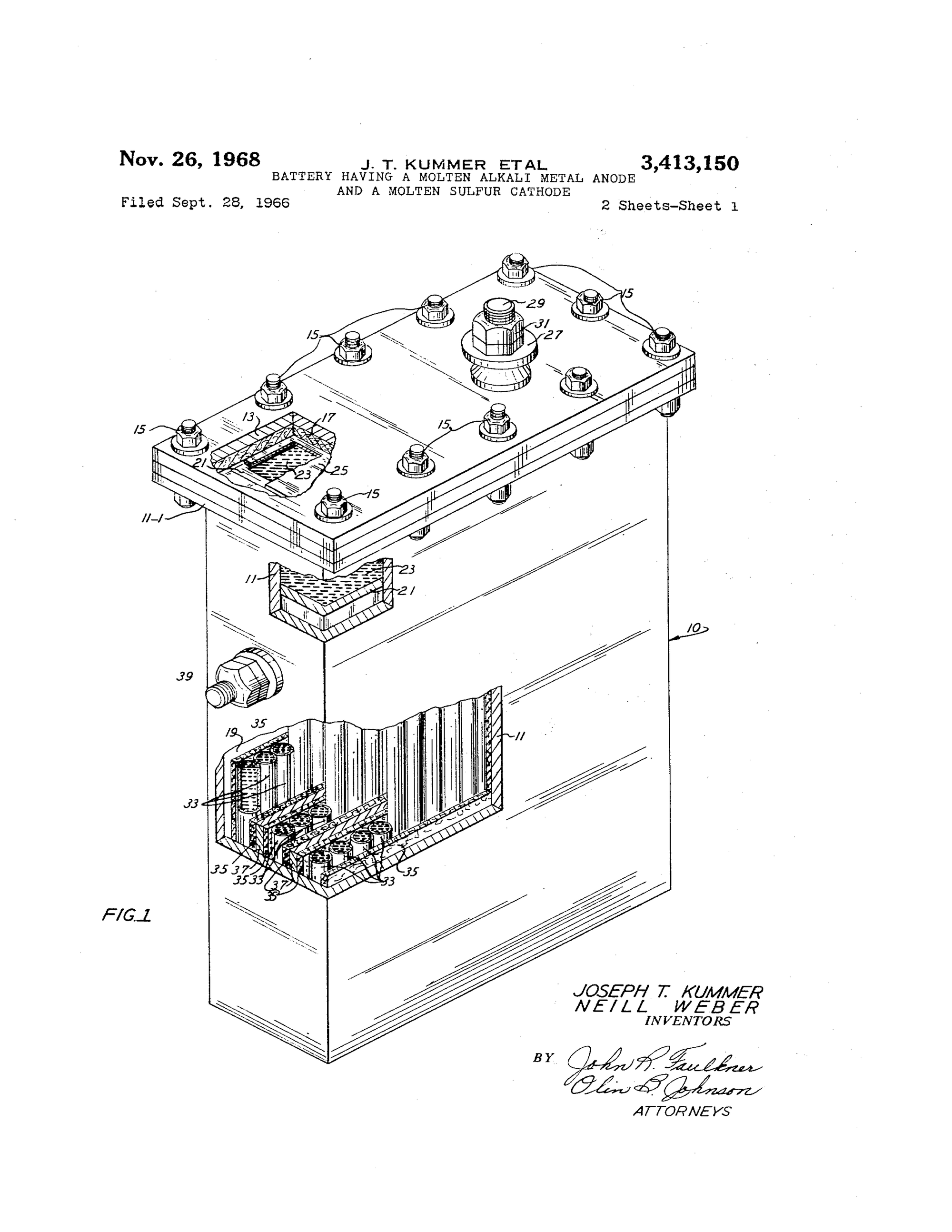
The project is being developed by Exus Renewables, insert link which recently purchased the existing Britton solar facility near Moriarty from New Mexico Renewable Development, a joint venture of PNM and American Electric Power, according to Rob Burpo, president of First American Financial Advisors Inc. and the county's longtime financing advisor. The solar facility was financed through two 2019 industrial revenue bonds, one issued by the county and one by the City of Moriarty.
Burpo said the proposed 60-megawatt battery system would occupy about 7.69 acres inside the solar facility's existing fence line, entirely on the county side of the city limits and entirely within the Moriarty school district.
Brian Reindel, Exus Renewables' vice president of development, told commissioners the batteries would arrive in units resembling shipping containers, each roughly one megawatt. He said the system would be integrated into PNM's grid, storing surplus energy and releasing it when demand is high, rather than simply storing power from the adjacent solar panels.
"As renewable energy has become a higher portion of the portfolio, not just for PNM across the West, but specifically for utilities in New Mexico, there is a greater need for being able to store that energy to continue to maintain a reliable grid," Reindel said.
Reindel estimated construction would employ about 100 workers at its peak, and that the finished facility would add about one permanent position. He said the company plans for a roughly 20-year battery life, adding new units about every seven years as older ones degrade.
Commissioner Linda Jaramillo asked what would happen to the batteries at the end of their lives. Reindel said lithium recycling is an active and growing industry, but acknowledged that utility-scale battery storage is new enough that few, if any, large projects in the United States have been decommissioned yet.
What the county and schools would receive
Because the property is already covered by the 2019 bond, Burpo said, the project would not change property taxes on that land. Instead, the company would make payments in lieu of taxes (PILOT) under the same formula the county recently adopted for Pattern Energy's Palomas Power wind project: $2,800 per megawatt for the first five years, about $168,000 per year.
Under the state formula, about 60.81% of those payments would go to Torrance County, which the Mountainair Dispatch has calculated to be roughly $102,000 per year in the first five years, and about 39.19% would be divided among the county's five school districts. Burpo said half of the school share is assigned by project location, 40% by each district's acreage, and 10% by enrollment. His presentation showed Moriarty receiving about 58.13% of the school share, Mountainair about 19%, Corona about 12%, Estancia about 8.74%, and Vaughn just under 2%.
McCall asked whether the $2,800 rate was still open to negotiation. He noted that the commission had asked for a higher rate on the Palomas Power project and did not get it.
"We asked," McCall said. "I think it is fair to."
Reindel also told commissioners that Exus Renewables sets aside a percentage of each project's capital costs for community investment. He said the company has partnered with Rebuilding Together Sandoval County and a senior meal program in Sandoval County, and has held preliminary conversations with organizations in Torrance County, but said announcing specifics would be premature.
Wednesday's vote did not approve the bonds. It authorizes the county to publish notice and send required letters to the assessor, school districts, and other taxing entities. Bond counsel Eddie Duffy said the notice letters must go out 30 days before the ordinance is considered. Commissioners said the earliest public hearing would likely be the first regular meeting in November, on Wednesday, November 11, 2026.
McCall: "My business has outgrown my community"
During commissioners' reports at the end of the meeting, McCall said economic development has proven "much harder than I ever thought it would be seven and a half years ago when I took this office."
"When an economic development project does come in, this community does not want it," McCall said. "So, do we or do we not [want] economic development?" check audio and see if it really lacks the word “want”
Schwebach agreed, and offered his account of why EVEDA existed. He said the association was funded jointly by the county's municipalities and private industry, with private money making up 51% of its budget, which gave it "the ability for the infamous non-disclosures," an apparent reference to the non-disclosures involved in Project Mars. He said the organization dissolved after its director (Myra Pancrazio) retired.
"What I do know is the last large economic development that came in here was shot down before we could even get to the table with it, and the truth of what that could have been is never going to be known," Schwebach said. He did not name the project.
Schwebach tied the question to the rest of the day's agenda. "We just spent this entire commission meeting trying to figure out how to find funds for kids that need help with drug addictions, or senior citizens that need help with food," he said. "It would be nice to sit here and say, ‘How can this commission facilitate a business that is bringing in 100 jobs? Okay, five jobs would be nice.‘"
He blamed social media for turning residents against projects early and said the county has become "very divided regionally, ethnically," in ways he said did not exist 20 years ago.
McCall, who owns a seasonal pumpkin patch business, said he has hired 550 workers for the next six weeks, most of them high school students, and struggles to fill those positions locally.
"My business has outgrown my community," McCall said. "And I think it is because of the lack of the openness and the willingness to bring other industries and grow."
Senior meal funding increased to $50,000
Commissioners unanimously approved a memorandum of agreement with Presbyterian Medical Services (PMS) providing $50,000 in fiscal year 2027 to help cover meal and janitorial costs at the county's three senior centers, in Estancia, Moriarty, and Mountainair. Last year, the county contributed $40,000, split between meals and cleaning.
Greg Smith of PMS told commissioners the prior agreement expired June 30, and that PMS has cleaned the senior centers since then without reimbursement.
Smith said PMS staff drive almost 300 miles a day delivering meals to homebound seniors and are on pace to serve about 35,000 home-delivered meals and about 10,000 congregate meals this fiscal year. Services are available to any county resident age 60 or older.
Meal volume has stayed roughly flat, Smith said, but raw food costs alone rose about $20,000 in a single year, before accounting for recent fuel increases, and vehicle insurance costs have risen almost 30% over two years.
Smith said PMS expects about $498,445 in revenue this year against a projected need of about $637,000, leaving a deficit of roughly $140,000 that PMS covers from its own general fund. Most of the revenue comes from the state Aging and Long-Term Services Department through the non-metro Area Agency on Aging. He said the state's contract expects local governments to contribute funds, and that PMS was the only organization that responded to the most recent request for proposals.
"In my opinion, the right contractor for this job is the county," Smith said.
Schwebach said the contribution is effectively becoming a recurring budget item and asked that, before the next budget cycle, the county compare other providers' costs and work with PMS to press state legislators for more funding. McCall agreed.
"Otherwise, this is going to be a county budget line item that is going to be there, and it is only going to increase," McCall said.
A separate item on the PMS Mountainair clinic lease was removed from the agenda at the start of the meeting because PMS wanted its attorney to review the lease language again, Reynolds said.
Courthouse leaks prompt repairs, insurance claim
Commissioners approved a series of budget adjustments under Resolution 2026-30, voting on each separately at Schwebach's request.
The largest discussion concerned $100,000 for repairs at the county-owned judicial complex in Estancia, which houses the Seventh Judicial District Court. Commissioners had agreed to the funding in May, but it was left out of the final budget.
Dorella Molina, court executive officer for the Seventh Judicial District, said heavy rain recently poured through a light fixture onto Judge Shannon Murdock-Poff's desk. Court staff said the court asked contractors to prioritize the roof and missing drainage, which the staff said is damaging stucco and appears to be causing mold, followed by cracked flooring she described as a safety hazard.
Molina said the state has committed to match the county's $100,000 and that up to $300,000 in state funds may be available. County Operations Manager Victoria Archuleta said the county submitted an insurance claim for the roof and stucco on Tuesday, September 22, and that an adjuster will inspect the building.
The building, completed around 2003, "is the newest court in my district, and it has the most issues," Molina said.
McCall questioned whether an insurance claim for a deteriorating building would raise the county's premiums. Schwebach said he wanted to know whether the roof had been recently repaired and why it failed before more money is spent on it.
"I just do not want to throw money after money after money again," Schwebach said.
Commissioners also approved moving $300,000 in unspent fiscal year 2026 road funds into the current year, after Road Department Superintendent Leonard Lujan explained that last year's projects were billed after the fiscal year closed and were paid from this year's budget; increasing election expenditures by $50,000 to match money already received from the Secretary of State's office, which Deputy County Manager Michelle Jones said had been deposited into a general revenue line; and adding a reauthorized $115,713.08 legislative grant to the budget.
Grants Manager Jody Cornwall said that grant was originally appropriated for the Duran water system but was reauthorized for a water system project before House Bill 247, the state's new capital outlay reform law, took effect. McCall voted yes but cautioned that the county must "be very careful with our legislators" to spend appropriations the way lawmakers intended.
In a related vote, commissioners agreed to revert a separate $50,000 Duran water grant to the state, since the county no longer owns the system and could not spend the money before new state deadlines. A request to revert about $90,000 for a Fire Department comprehensive plan failed for lack of a motion; commissioners said they want to hear from Fire Chief Gary Smith, who was out sick.
Alamo behavioral health money rerouted
Jackie Muncy, program manager for Region 7 of the state's Behavioral Health Reform and Investment Act, told commissioners the region's plan was approved Friday, August 14, 2026, but funding has not yet arrived. Region 7 covers Torrance, Socorro, Sierra, and Catron counties, with Socorro County serving as fiscal agent.
Muncy said a formula approved in January set aside $708,401 for the Alamo Navajo community in Socorro County. At its most recent meeting, she said, the state's Behavioral Health Executive Committee reallocated funding for Native communities, sending Alamo's share through the Navajo Nation instead of the region. She said the three Health Care Authority members of the committee opposed the change.
"This process was supposed to be where people are heard from the ground up," Muncy said, adding that she asked to join an upcoming meeting between the state and the Navajo Nation and was told she could not because it is a government-to-government meeting.
Schwebach asked how Torrance County would have a voice in how the region's money is spent locally. After learning that two Torrance County residents sit on the regional stakeholder committee, he proposed creating an appointed county committee to expand that representation, with its makeup to be considered at the next meeting. Jaramillo asked to serve on it. McCall suggested the county might use some of its opioid settlement money alongside the state funds.
Other business
Commissioners voted to table approval of their September 9, 2026 meeting minutes after staff said corrected versions had been prepared. Jaramillo said the original draft was the first prepared by a staff member using an artificial intelligence program, and that she had asked Seneida Anaya of the Clerk's Office to help revise it. Reynolds said the corrections involved a spelling error and an omitted title, not the substance of the minutes. Schwebach said the corrected minutes should be posted and approved at the next meeting.
Commissioners unanimously approved Resolution 2026-29, amending the county's certificate of 2027 property tax rates after Deputy Assessor Linda Gallegos caught an error by the state Department of Finance and Administration. The corrected certificate restores the county debt service rate to 0.171 mills from zero and removes a two-mill school capital improvement levy for School District 16. A mill equals $1 in tax for every $1,000 of a property's taxable value.
Commissioners approved reclassifying a treasurer's office position to expand field collection work from delinquent manufactured homes to all delinquent property, with a $1.50-per-hour raise. County Treasurer Kathryn Hernandez said the employee in the position has collected $279,161 in previously delinquent manufactured home taxes since February. She said the county has about 3,297 delinquent properties, and that the state is preparing an auction of about 400 of them in November. Her goal, she said, is to reach owners before their properties go to auction.
Commissioners upheld the Planning and Zoning Board's approval of a Type 3 subdivision application by Southwest Property Solutions LLC after the appellant, Kate Ullrich, did not appear at the public hearing. Planning and Zoning Director Don Goen testified that notice was mailed, posted, and published, and that his calls went unanswered.
Commissioners also approved three resolutions declaring rubbish and debris on residential lots to be a menace to public health and safety, allowing the county to clean them up and place liens on the properties: 17 Washington Loop in the Echo Ridge subdivision near Moriarty; 2 Dusty Court; and a lot in the Estancia Ranchettes subdivision. Goen said the county has about 70 properties on its cleanup list, and that a pending ordinance revision would bar bringing mobile homes older than 30 years into the county.
Commissioners approved Resolution 2026-35, accepting a state Transportation Project Fund award of about $1.77 million to resurface all seven miles of Lexco Road with a two-inch overlay and widen it about 12 inches on each side, including striping.
The Estancia Valley Youth and Family Council, the county's juvenile justice board, reported serving 193 youth in fiscal year 2026 and spending all but $805 of its $261,602 state grant. Coordinator Rebecca Armstrong said 64 first-time offenders went through teen court, most for school-related vaping and THC possession. Approval of the council's board members was moved to the next agenda as an action item.
Voting and flood preparation
County Clerk Sylvia Chavez said election tabulators will be certified Tuesday, September 29, and Wednesday, September 30, 2026, beginning at 9:00 AM MDT at the county's election warehouse, and that the process is open to the public. Early voting begins Tuesday, October 6, 2026, at the Torrance County Administrative Offices, 205 South 9th Street, Estancia, from 8:00 AM to 5:00 PM MDT Monday through Thursday, with Friday and Saturday hours added the last weekend of October. Encino voters will cast Election Day ballots in the village gym rather than the community center, which is under construction.
Chavez asked commissioners what issues they want raised at the New Mexico Counties board of directors meeting on Friday, October 2, 2026. McCall said his priority would be the Inspection of Public Records Act (IPRA) and IPRA-related legislation that has failed to pass.
What residents did not hear answered
Tracey Master, a retired county employee who commented via Zoom, raised several concerns that commissioners did not address during the meeting. She said the county's domestic violence services contract expires Wednesday, September 30, 2026, but was not on the agenda, and asked whether services would lapse. She said the domestic violence program's vehicle still has no license plate nine months after it was stolen, and that the manager of Moriarty Foods told her the store will no longer extend credit to the county because payments have taken six months.
Master also said the county's DWI coordinator position has been vacant more often than filled since she retired in 2023, and asked whether the county has found office space for the fire chief. "Our residents and your employees deserve a hell of a lot better than they are getting," she said.
In her report, Reynolds said the county has asked the Department of Finance and Administration for additional DWI program funding for its Smart Choice van, drivers, maintenance, and school outreach.
Update, October 1, 2026, at 1:22 PM - Corrected misspelling of William Peifer.