
Estancia declares water emergency, but the meeting understated the severity of the town's crisis
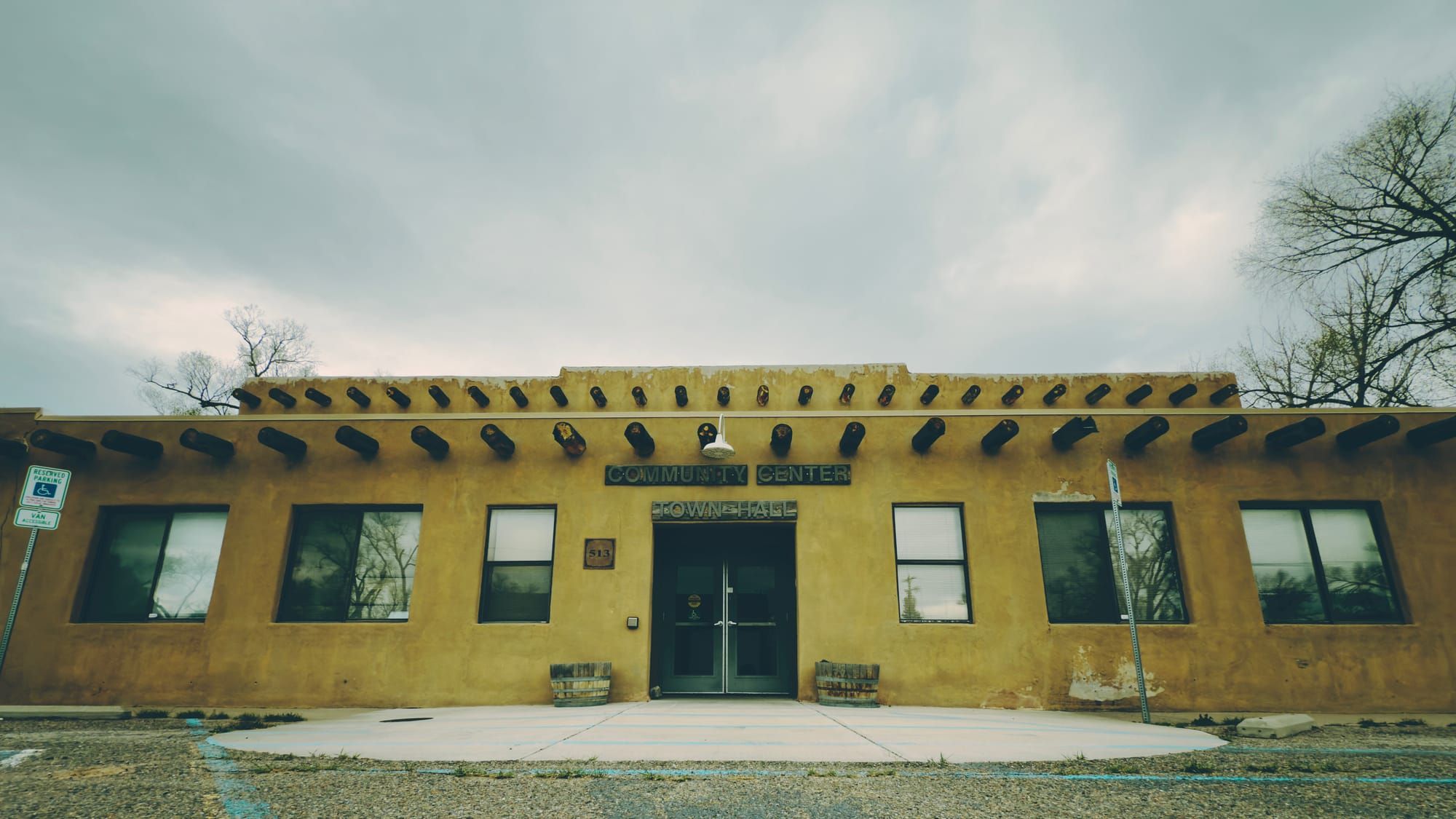
A unanimous vote Thursday gave the town emergency powers to bypass procurement rules and seek state and federal aid. Records obtained after the meeting show the water situation is significantly worse than officials described.
Estancia water emergency: what you need to know
The current situation
- As of 4:30 PM on Thursday, June 25, 2026, Estancia's storage tanks held approximately 79,398 gallons - enough for roughly three hours of normal use at the town's actual daily consumption rate.
- The town was approximately 175,000 gallons short of the minimum safe reserve established by its own engineering assessment.
- The Board of Trustees unanimously declared a local water emergency, authorizing emergency procurement and requests for state and federal assistance.
What officials got wrong Thursday night
- The board cited 199 gallons per minute as the system's daily consumption requirement. That figure comes from a 2012 engineering model, not from current billing records.
- Actual current consumption, derived from the town's own billing records obtained by the Mountainair Dispatch the morning after the meeting, is approximately 431 gallons per minute - more than double the figure cited Thursday.
- The minimum safe reserve of 254,400 gallons cited by the board was calculated against that same outdated 2012 baseline; at actual current consumption rates, that target is significantly understated.
Where the water is actually going
- Commercial customers consumed approximately 85.5 percent of Estancia's water in fiscal year 2026 - roughly 193.6 million of 226.5 million total gallons. Residential customers accounted for approximately 14.5 percent. Total water consumption has tripled since 2019, with the increase concentrated almost entirely in commercial accounts.
- CoreCivic, the private contractor operating the Torrance County Detention Facility under contract with ICE, is a commercial customer on the municipal system; the town has reduced that draw to 16 gallons per minute during the emergency.
- Conservation measures directed at residents address approximately one-seventh of the town's total water demand.
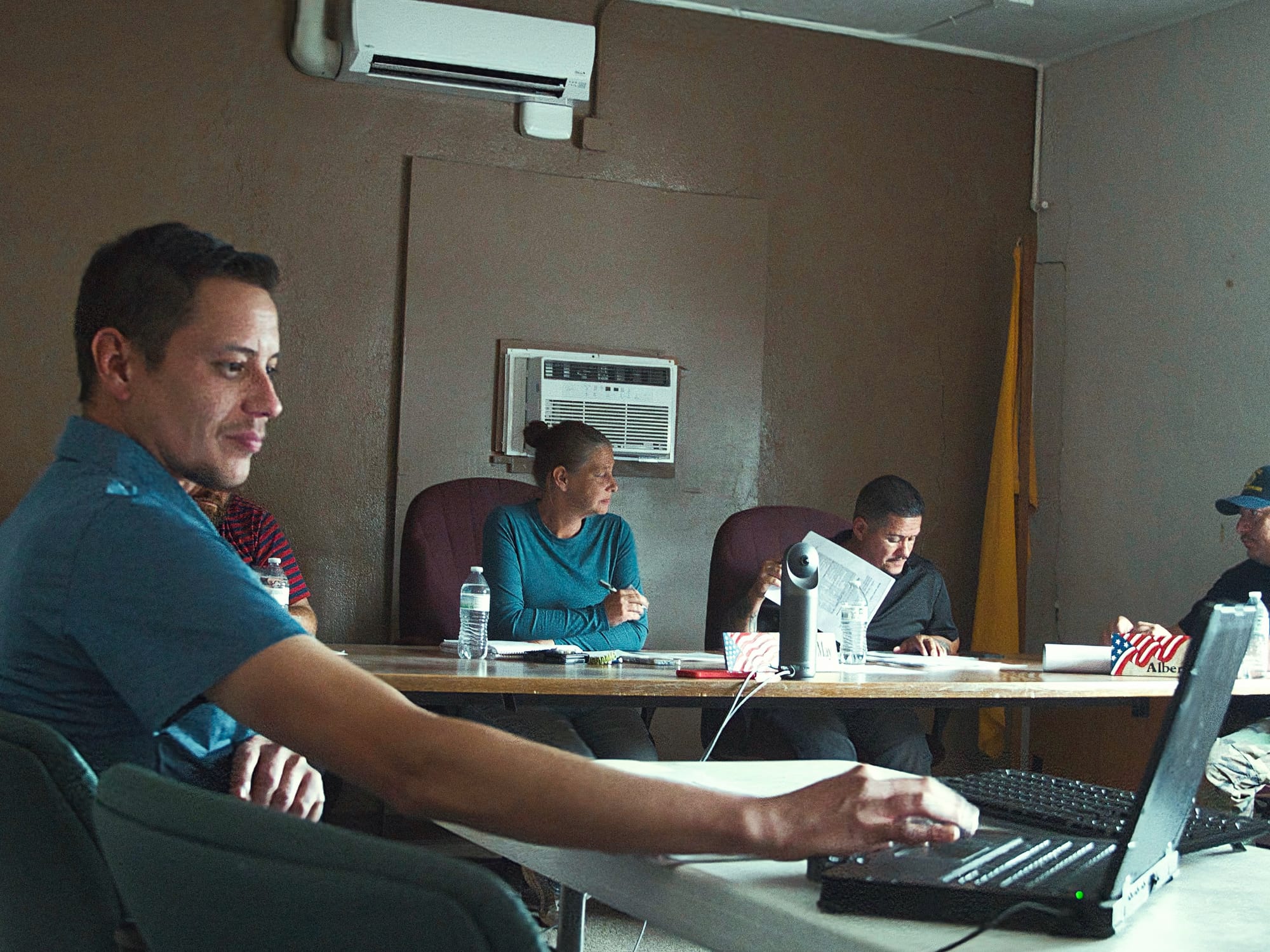
ESTANCIA — The Estancia Board of Trustees declared a local water emergency at an emergency meeting on Thursday, June 25, 2026, voting unanimously to adopt Resolution 2026-022, a measure that grants town officials authority to bypass normal procurement timelines, restrict water use, and formally request assistance from state and federal agencies.
The trustees' public case for the emergency, however, dramatically understated the severity of the crisis.
Figures cited during the meeting came from a 2012 engineering model — not from current billing records. A preliminary engineering report prepared for the town in 2020 by Albuquerque firm Bohannan Huston, Inc., and billing records provided to the Mountainair Dispatch by Deputy Clerk Roy Hubbard the morning after the meeting, show that actual water consumption has tripled since 2019, that the system is operating at more than double the load it was designed to handle, and that commercial users - not residents - account for approximately 85 percent of that consumption.
Mayor Runnel Riley, who has been on a leave of absence previously reported on by the Mountainair Dispatch, was not present at Thursday's meeting. Mayor Pro Tem Albert Lovato presided over the special meeting, with Trustees Martin Lucero and Amy May voting on the resolution. Trustee Patrick Sanchez was present earlier in the meeting but departed before the resolution vote, due to a power failure that implicated Sanchez's responsibilities for his employer, Central New Mexico Electric Cooperative (CNMEC). The resolution passed 3-0 and was signed by Lovato and attested by Hubbard.
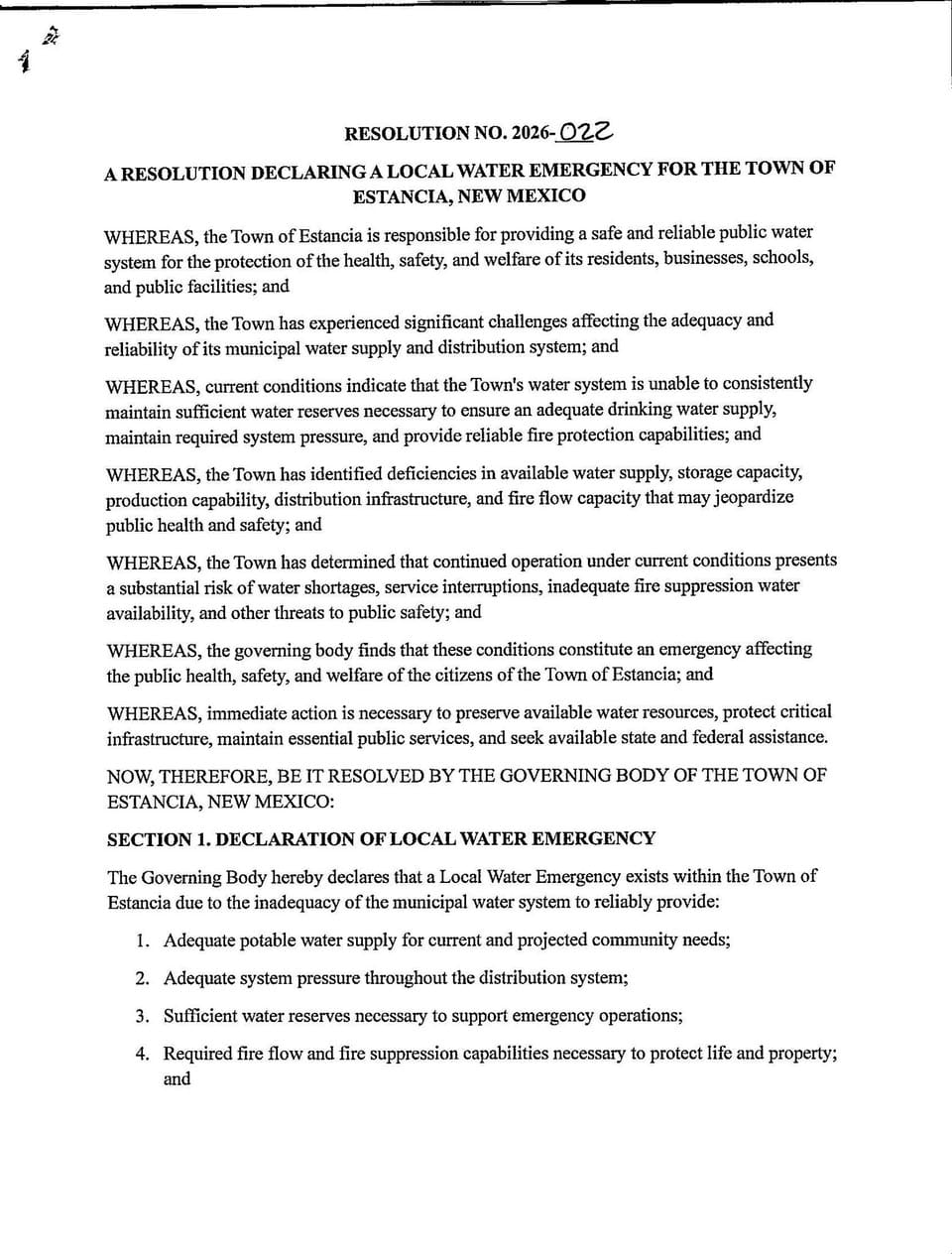
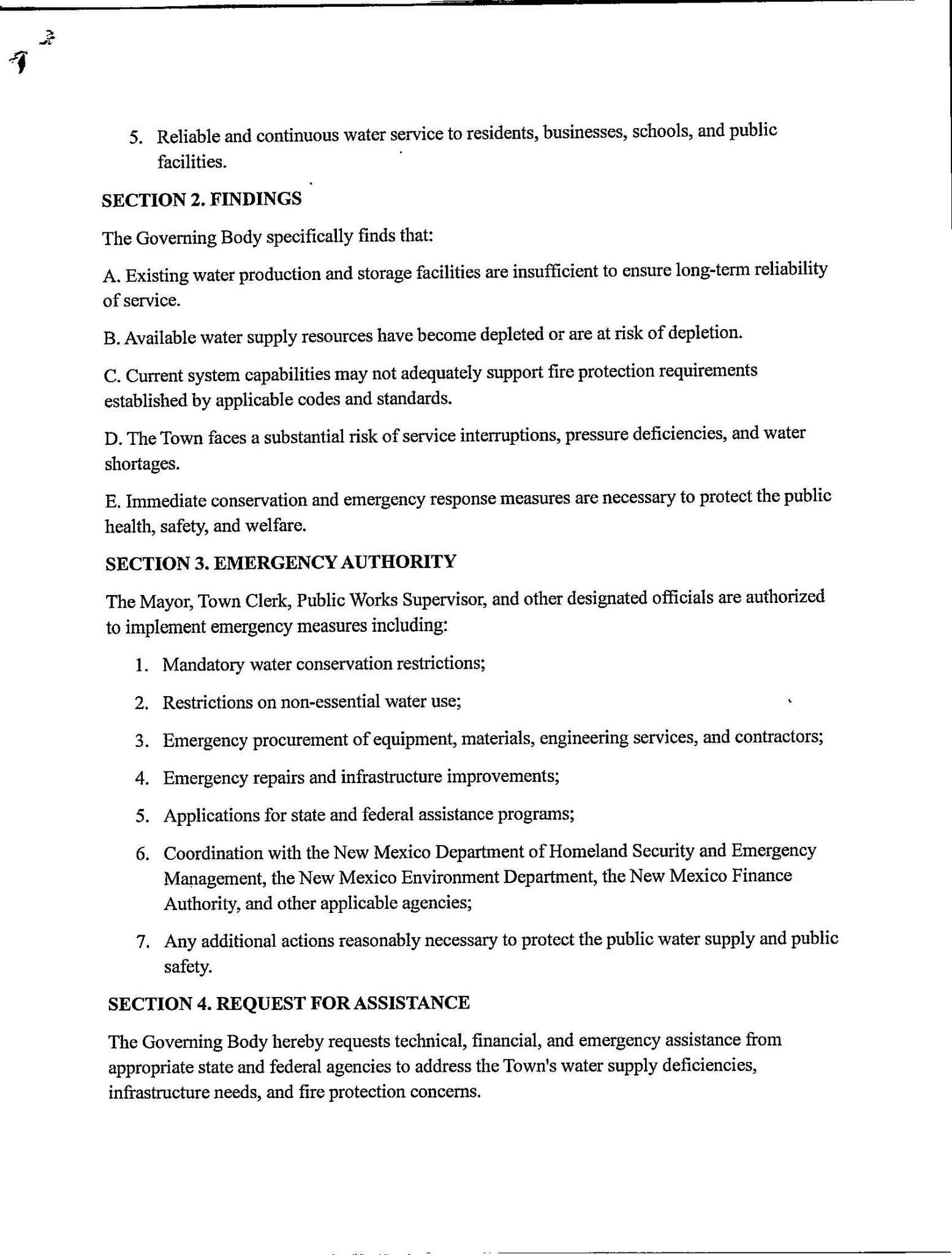
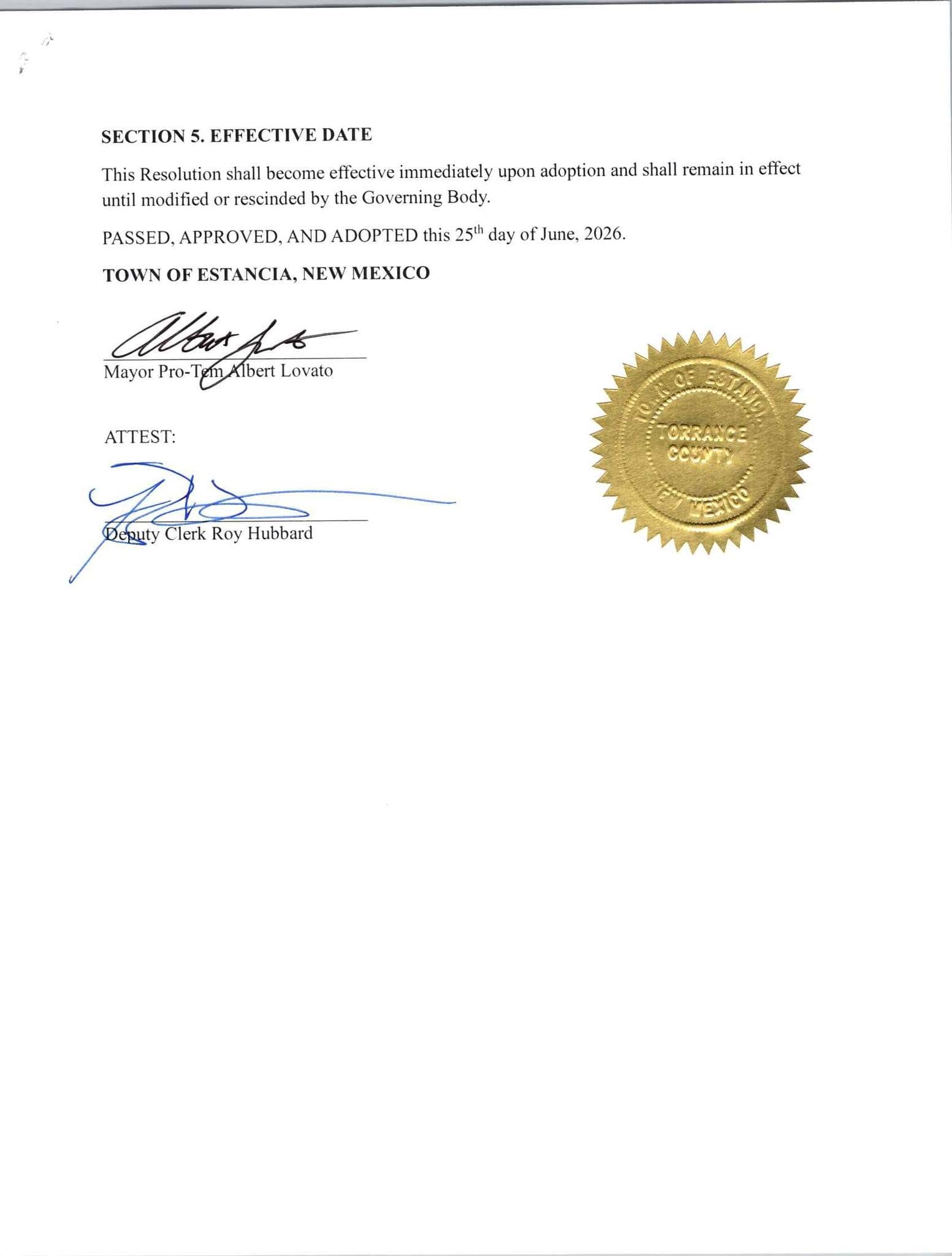
Resolution 2026-022, Declaring a Local Water Emergency for the Town of Estancia, NM - Courtesy the Town of Estancia
What the numbers say - and what six years of records reveal
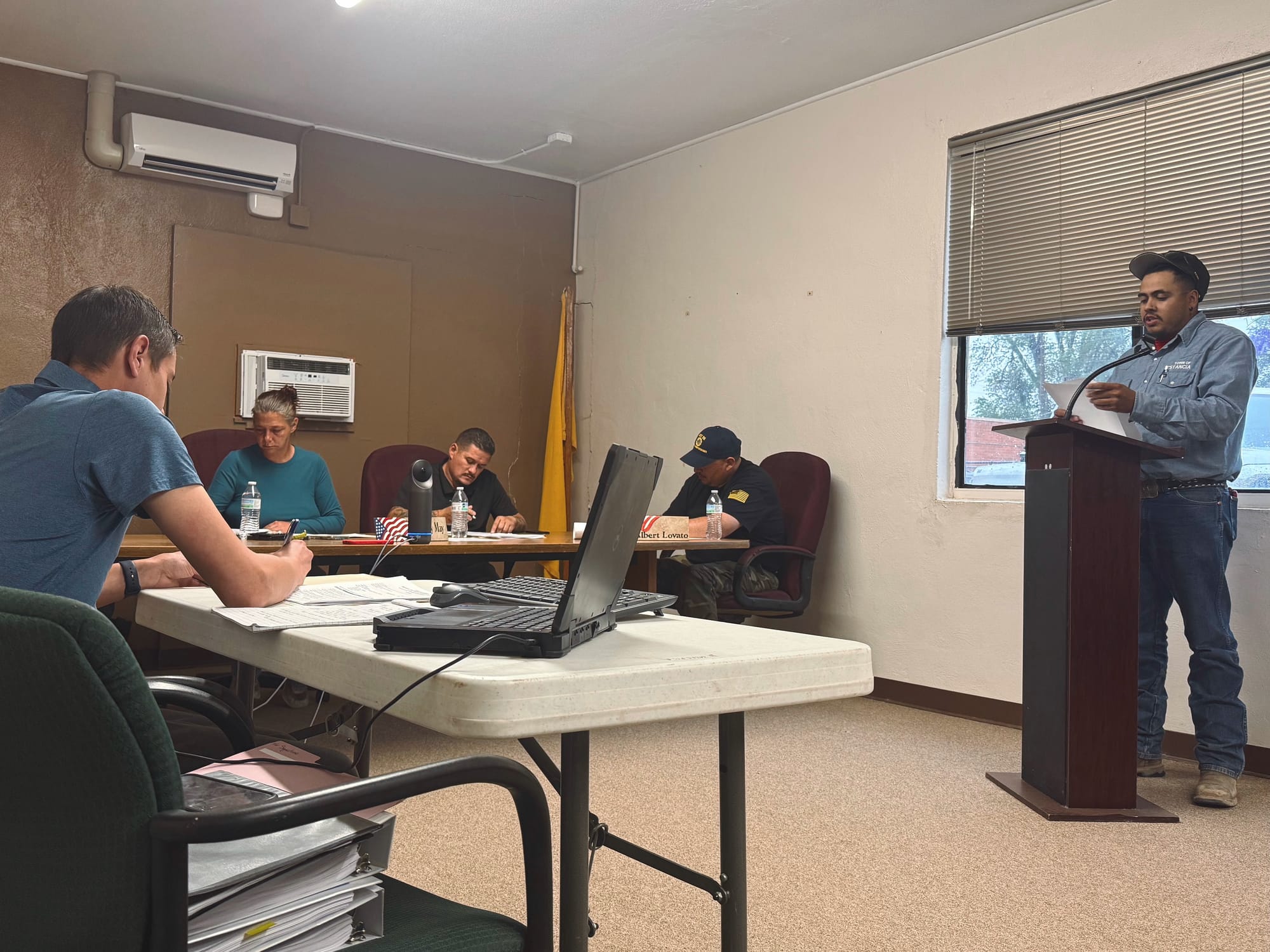
Public Works Supervisor Edwin Bencomo opened the meeting with a status report based on measurements taken at 4:30 PM on Thursday. The town's two storage tanks together held approximately 79,398 gallons, roughly 39,690 gallons per tank. Bencomo noted that one tank gauge was not functioning, meaning that figure comes with some uncertainty.
The system's total storage capacity is 871,000 gallons, according to Trustee Lucero. At 79,398 gallons confirmed in storage Thursday afternoon, the town had roughly 9 percent of its full water capacity.
A 2020 preliminary engineering report prepared for the town by Bohannan Huston, Inc., sets a combined minimum storage target of 254,400 gallons, accounting for daily operational use, fire suppression reserves, and emergency capacity. Thursday's confirmed storage was approximately 175,000 gallons short of that threshold, representing roughly 31 percent of minimum safe reserves. What neither the board nor town staff noted Thursday is that the 254,400-gallon target was itself calculated for a system operating at 199 gallons per minute of average demand, a figure drawn from a 2012 engineering report. At current actual consumption rates, that minimum is substantially understated.
Those current rates represent a crisis considerably more alarming than what the board presented on Thursday.
The morning after the meeting, Hubbard provided the Mountainair Dispatch with billing records covering the current fiscal year, July 1, 2025, through June 26, 2026. Total water consumption for that period was 226,484,137 gallons, a daily average of approximately 620,500 gallons, or roughly 431 gallons per minute. At that rate, the 79,398 gallons confirmed in storage Thursday afternoon represented approximately three hours of normal supply.
The billing records also reveal where that water is going. Of the 226,484,137 gallons consumed in fiscal year 2026, 193,619,875 gallons — approximately 85.5 percent of the total — were classified as commercial usage. Residential customers accounted for approximately 32,813,454 gallons, or roughly 14.5 percent of total consumption.
Comparing FY2026 billing data with the 2019 calendar-year production figure of 74,733,047 gallons documented in the town's own records shows that total water consumption has tripled over approximately six years. The increase is concentrated almost entirely in commercial accounts.
A system operating at double its designed capacity
The 2020 Bohannan Huston assessment documents the system's four wells at a combined design maximum production of 595 gallons per minute. At the current average demand of approximately 431 gallons per minute, running all four wells continuously at full design capacity would leave a margin of only 164 gallons per minute, insufficient to rebuild storage reserves at any meaningful pace. At peak day demand - calculated using the engineering assessment's 1.5 peaking factor applied to current actual consumption - required production would reach approximately 647 gallons per minute, exceeding the system's total design capacity regardless of how many wells are operating.
Thursday, Bencomo reported that Well 4 was producing approximately 44 gallons per minute and Well 8 - designated the North Punkin Chunkin Well in the engineering assessment, with a design capacity of 245 gallons per minute - was running at approximately 80 gallons per minute, roughly one-third of its rated output. Well 9, the South Punkin Chunkin Well, has been shutting down intermittently because its 110-gallon-per-minute pump is drawing water faster than the aquifer can recharge. The town plans to replace it with a 40-gallon-per-minute unit, which Bencomo said would produce a more consistent flow. Even crediting Well 9 at its planned replacement rate, combined production from all three active wells would total approximately 164 gallons per minute — less than 38 percent of current average daily demand.
To supplement well production, the town hauled purchased water on Thursday: five truckloads totaling approximately 32,500 gallons, plus approximately 1,600 gallons hauled the previous day, for a combined total of roughly 34,100 gallons. Additional loads were expected on Friday and Saturday.
Design plans for a new municipal well - Well 10, in the engineering assessment - were completed by Bohannan Huston in 2016. The 2020 assessment recommended the new well as the priority capital improvement for Estancia. Nonetheless, Well 10 was never built.
Funding has been the stated obstacle for a decade. The town is now pursuing a $4,950,000 New Mexico Water Trust Board grant to finance the work, with the contract closing date set for August 14, 2026.
What Bencomo was asked - and what the board appeared not to know
The Mountainair Dispatch asked Bencomo directly during the meeting: how many days of regular water use does the current supply represent?
Bencomo did not provide a figure. "We actually gained," he said, noting that well levels had risen from eight feet the previous day to approximately 13 feet. "I don't want to give you a day, but we should have - we shouldn't be having water [outages]. I don't see us not having water. We might not have the pressure we would like."
The exchange revealed that the town did not have current consumption data in the room on Thursday night. When the Dispatch followed up by asking for the town's average daily usage in gallons, the discussion moved to the 199-gallon-per-minute rate - a decade-old model baseline - and Hubbard acknowledged he had not compiled daily usage data for the meeting. "I didn't pull daily usage," he said. "All I did was pull monthly for the town."

Hubbard corrected the record the following morning. In an email to the Mountainair Dispatch, he said he had misquoted the annual usage figure at the meeting and provided the corrected billing records. The actual daily average - approximately 620,500 gallons - is more than two and a half times the 199-gallon-per-minute rate the board cited Thursday, and more than twice what the system was designed to supply.
The question of how many days of supply remain cannot be meaningfully calculated from the figures presented at Thursday's meeting. Using the corrected daily consumption figure, 79,398 gallons of confirmed storage covers approximately three hours of normal use, not accounting for water being actively pumped into the system and hauled from external sources.
When a member of the public asked whether the aquifer problem was limited to Estancia's wells or reflected conditions across the broader Estancia Basin, Hubbard said, "I can't answer that." Trustee Lucero said the Bohannan Huston engineering assessment addresses basin hydrology in detail and could be made available to the public (see below).
The Mountainair Dispatch obtained that report the morning after the meeting. It documents six aquifers within the Estancia Basin, with combined storage measured in the billions of gallons, but notes that the town's well locations must be carefully sited due to soil chemistry and water-quality constraints. The report does not resolve whether the drawdown problems in Estancia's current wells reflect localized depletion or broader basin-wide stress.
Arthur Pond is part of the system
A significant disclosure emerged during a public discussion of firefighting capacity on Thursday.
A member of the public asked why the town pond - which she said former Mayor Nathan Dial had previously described as not connected to the municipal water system - could not be used as a water source for fire suppression without drawing down drinking water reserves.
Bencomo confirmed that the pond is now integrated into the municipal system. "We went through state requirements, they came, tested it, we cleaned our tank, and it met requirements to be put into the system," he said. "So it is going into the system, and it's pumping 31,000 gallons a day when it's running, when it's full."
Trustee May said that mutual aid agreements with Mountainair, Moriarty, and other regional fire agencies are in place, and that drawing directly from the open pond would risk damaging fire equipment due to biological contamination in the water.
The board did not address the apparent contradiction between Bencomo's disclosure and the prior statement attributed to Dial.
CoreCivic is drawing from the municipal system during the emergency
Bencomo stated on Thursday that CoreCivic, the private contractor that operates the Torrance County Detention Facility under contract with Torrance County and US Immigration and Customs Enforcement, has been drawing from the Estancia municipal system. The town has reduced CoreCivic's draw to 16 gallons per minute during the emergency and indicated it would reduce that further if necessary. The facility is specifically identified on the water system maps included in the 2020 engineering assessment.
Commercial users account for approximately 85.5 percent of all water consumed in Estancia in the current fiscal year. The Mountainair Dispatch has asked Hubbard whether a formal service agreement governs CoreCivic's use of the municipal supply and what the facility's draw has been by year. Those questions had not been answered as of publication.
State representative calls for Riley to step down
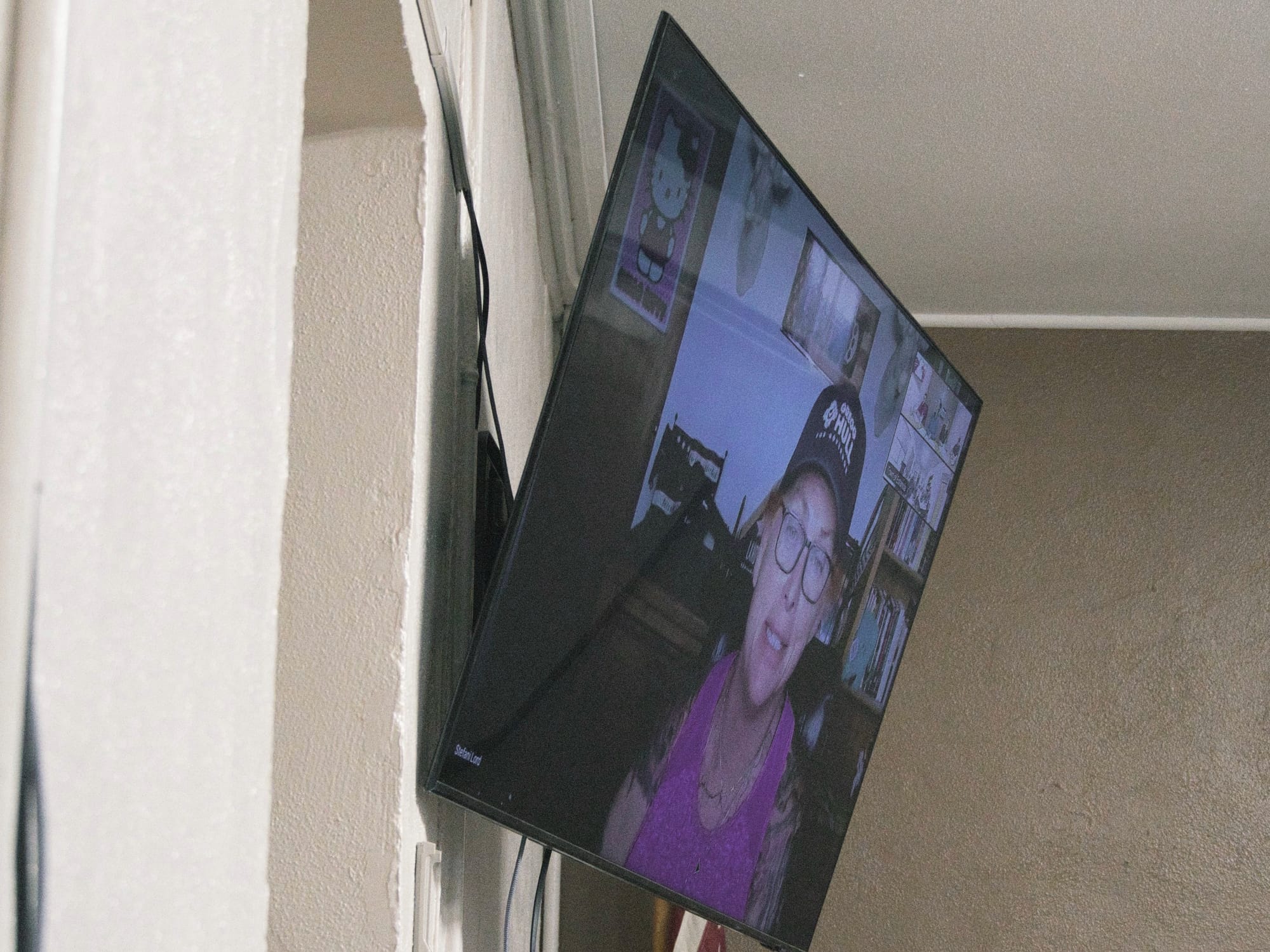
New Mexico House Representative Stefani Lord joined the meeting by Zoom and thanked Lovato, May, and Hubbard for coordinating with the New Mexico Water Trust Board to accelerate the release of $4,950,000 in grant funding for a new municipal well.
She then addressed Riley's absence directly.
"I am extremely disappointed in your mayor," Lord said. "He has not reached out to me. He's not talked to me. This is an urgent matter, and I don't know what he's doing." Lord said Riley had not been fulfilling his duties and called for him to step down, describing it as an official statement.
Mayor Riley did not respond to a request for comment from the Mountainair Dispatch.
The path to a new well - and the timeline problem
The $4,950,000 Water Trust Board contract, originally set to close June 28, 2026, has been pushed to August 14, 2026, requiring the town to bridge the current emergency for another seven weeks before the funding mechanism even closes. After closing, a competitive bidding process must be completed before drilling can begin.
A special board meeting is scheduled for July 10, 2026, to adopt the resolution required to formally accept the Water Trust Board contract. The town also has $300,000 available from the New Mexico Environment Department for test drilling, and that work is already underway to confirm water availability at the proposed well site.
Estancia's water supply has been documented as being under strain for years. The Mountainair Dispatch reported in July 2024 that then-Mayor Nathan Dial warned the Board of Trustees the town could run out of water entirely, at a time when storage was estimated at roughly two days of supply. A water main break in June 2026 - caused when an individual working for the Montoya family on the Tillery building demolition cracked a main without first calling the required 811 dig-safe hotline - cost the town approximately 15,000 gallons at a moment Lovato had already described as critical.
The 2020 engineering assessment identified 13 locations requiring six-inch PVC pipe for system looping and more than 36 additional piping areas requiring upgrades, totaling nearly 50,000 linear feet of pipe that will eventually need replacement. Some portions of the existing distribution system are made of asbestos concrete, which requires hazardous materials certification and specialized disposal. Trustee Lucero characterized those longer-term needs as separate from the immediate emergency.

Fire protection, schools, and the county fair
The emergency declaration's most direct near-term consequence beyond drinking water is fire suppression. A 2019 hydrant test included in the engineering assessment found that none of the town's 96 hydrants could produce the 1,500-gallon-per-minute target flow rate while maintaining minimum system pressure. Of the 96 hydrants tested, 66 could produce between 1,000 and 1,500 gallons per minute, 20 could produce between 500 and 1,000 gallons per minute, and 10 produced less than 500 gallons per minute.
Estancia Municipal School District's outgoing superintendent, Dr. Cindy Sims, submitted written concerns regarding the water emergency, which were read aloud by Trustee Lucero on Thursday. According to Sims, the district's summer school program cannot reliably flush toilets or meet the New Mexico Department of Health temperature requirements for commercial dishwashing, affecting meal service for students who depend on school-provided food. The district has exhausted its five allowable remote learning days. A forced school closure would cost the district approximately $74,000 per day in lost state funding.
A construction project underway at Estancia Elementary School adds a separate ongoing demand. The project is estimated to consume approximately 15,000 gallons of water per month, which must now be hauled at an estimated cost of $3,900 per month, totaling $62,400 over a 16-month project duration.

Lovato flagged two additional high-demand events: the Torrance County Fair, scheduled for the second week of August, which he said has historically drawn significant water from the town's system; and the July Fourth fireworks celebration, which carries fire-suppression implications that the board discussed at length.
Trustee May recommended that the board consider a fireworks ban applicable to residents if they do not voluntarily limit use before the holiday, and asked that the item be placed on the agenda for Tuesday's public meeting. The board voted to direct staff to issue notices accordingly. No mention was made of eliminating the municipal fireworks celebration.
What was decided
By a vote of 3-0, the board adopted Resolution 2026-022, which declares a local water emergency effective immediately. The resolution authorizes the Mayor Pro Tem, Town Clerk/Treasurer, Public Works Supervisor, and other designated officials to implement mandatory water conservation restrictions, bypass normal 30-day competitive bidding requirements for emergency procurement, make emergency repairs and infrastructure improvements, apply for state and federal assistance programs, and coordinate with the New Mexico Department of Homeland Security and Emergency Management, the New Mexico Environment Department, and the New Mexico Finance Authority.
The board also directed staff to send conservation notices to residents, issue a notice to the school district, address the question of public use of fireworks at Tuesday's public meeting, and add a standing water update to every future board meeting agenda.
Two separate events are scheduled for Tuesday, June 30, 2026, at the Torrance County Building, 205 S Ninth Street, Estancia. A public meeting specifically on the question of Mayor Riley's status will be held from 5:45 to 6:15 PM, with public comment welcome at that time. The Town's special board meeting, at which trustees will take up the remaining agenda items, begins at 6:15 PM. Both sessions are accessible via Zoom at meeting ID 886 7848 8616, passcode 247412. Written comment on the Riley matter may also be submitted to Town Clerk/Treasurer Veronica Navarrette at vnavarrette@estancianm.gov, dropped off at Town Hall at 513 Williams Avenue, Estancia, or mailed to Town of Estancia, PO Box 166, Estancia, NM 87016.