
Clouds Cannot Stop Abó Dark Sky Event, and Torrance County Spots to Try Night Photography Yourself
Overcast Skies Do Not Deter Stargazers at Abó
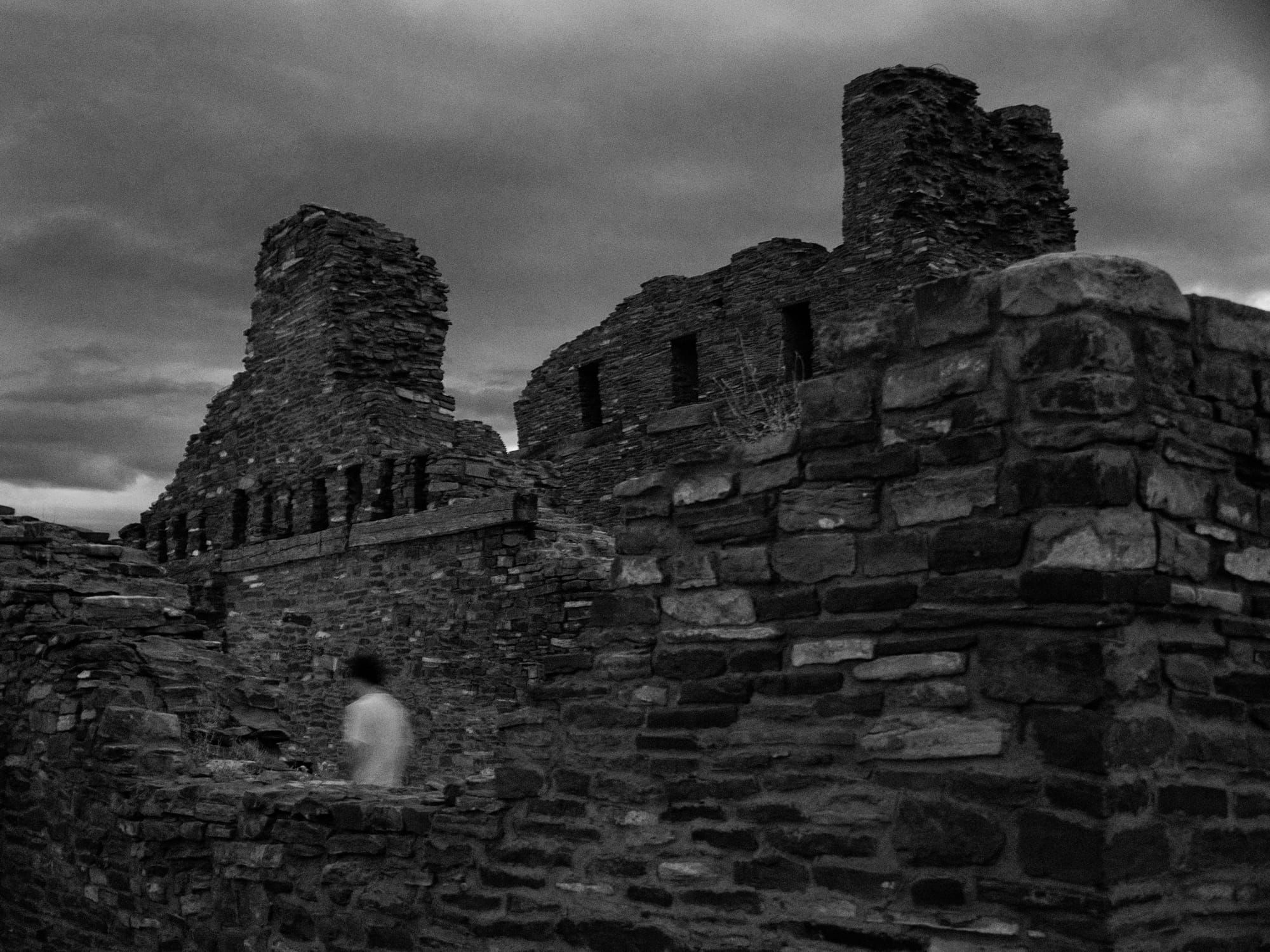
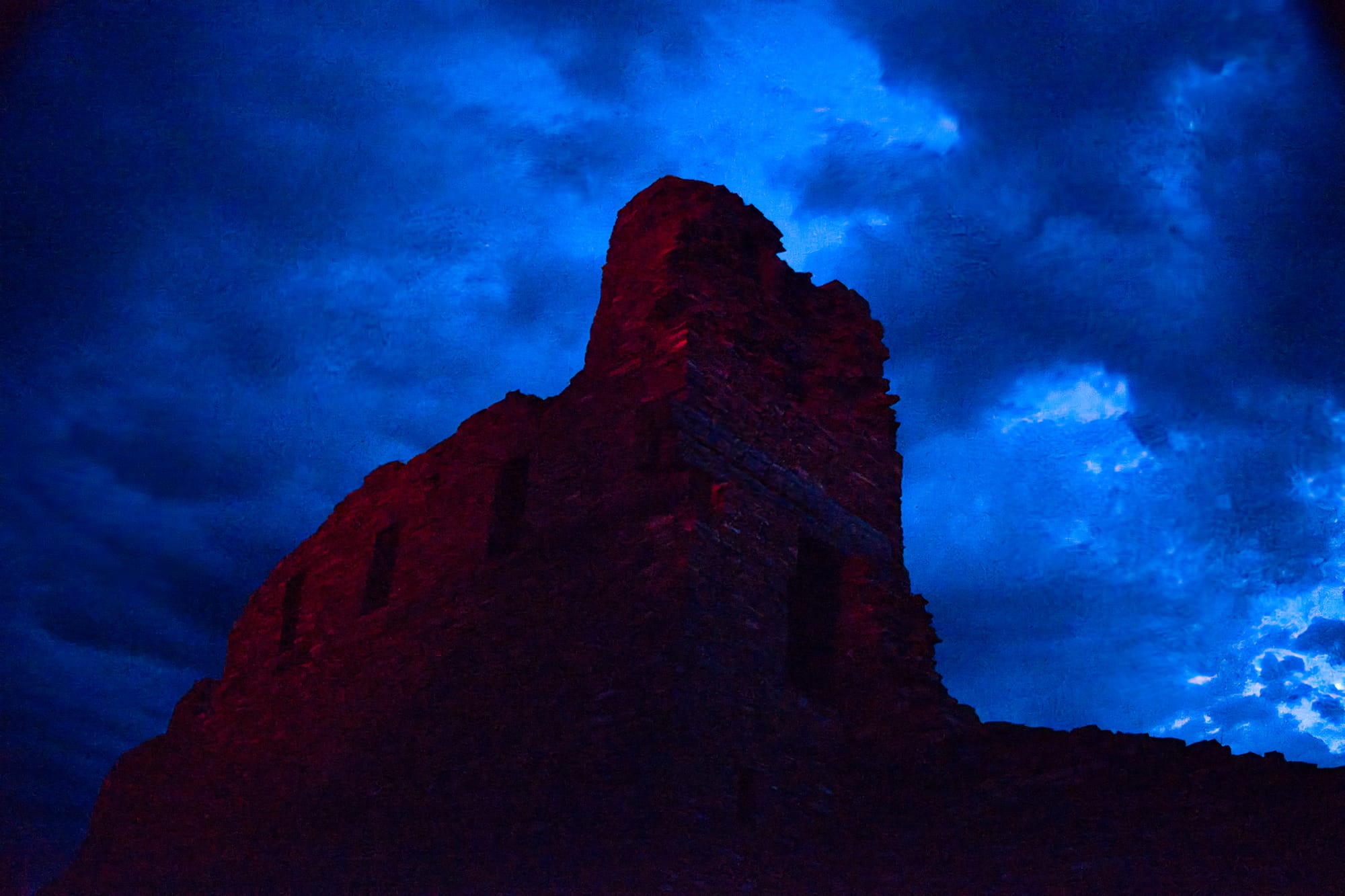
The National Park Service Dark Skies astronomy event defied the day's weather on Friday, July 17, 2026. The event at the Abó unit of Salinas Pueblo Missions National Monument was limited with respect to astronomy due to the overcast weather, although the Moon and Venus were visible rising up from behind the Abó ruins.
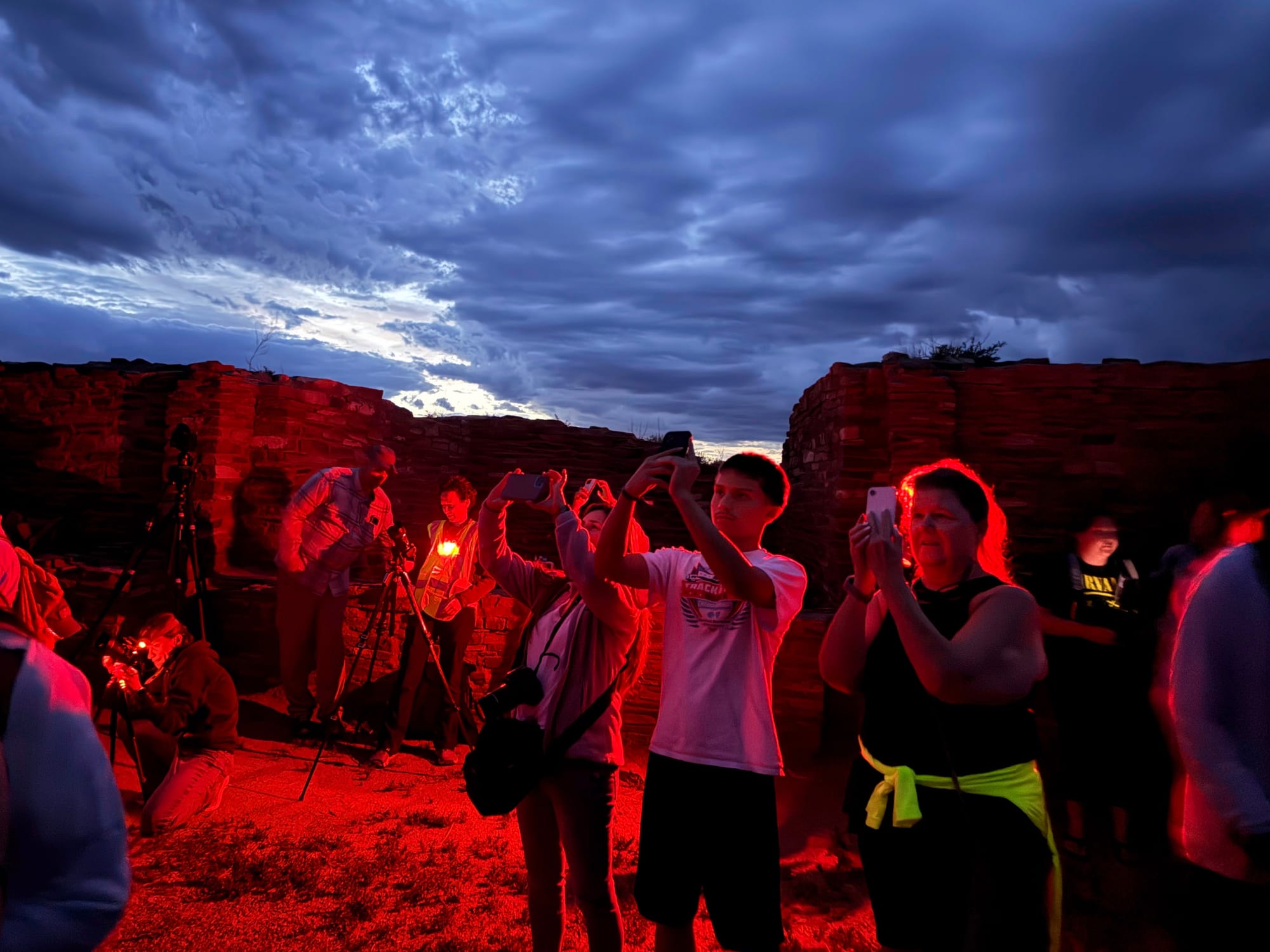
Still, as noted by guest photography instructor Sarah McIntyre, the weather gave attendees a moment to make lemonade out of lemons. McIntyre and other photographers instructed visitors regarding how to take night and low-light photos using dSLRs (digital single-lens reflex cameras), mirrorless cameras, and cell phone cameras without flashes. Attendees explored how to properly address issues like taking cameras down a number of stops, meaning reducing the amount of light reaching the sensor through a smaller aperture or lower ISO, to make long-exposure images from tripods. When the clouds occasionally broke, telescopes were available for visitors to view a triple star cluster.
NPS Park Ranger Adair Bock assisted guests as they left, noting that he had moved a rattlesnake from the parking lot during the event, a reminder that any nighttime outing in Torrance County calls for a flashlight underfoot and a careful eye on the trail.
Getting Started With Night and Low-Light Photography
For those interested in nighttime or low-light photography who were not able to join the event, here are a few tips to get readers started.
- Shoot in manual mode. Automatic settings tend to overexpose bright points of light, such as the Moon, and underexpose everything else. Start with a wide aperture, around f/2.8 to f/4, an ISO between 800 and 3,200 depending on how dark the sky is, and a shutter speed of 10 to 25 seconds for star points. Longer exposures will begin to render stars as trails rather than points of light, an effect some photographers use intentionally.
- Use a tripod and a remote shutter release or a two-second self-timer. Long exposures amplify even the slight vibration of a finger pressing the shutter button, and a stable base is the difference between a sharp frame and a blurred one.
- Focus manually, and focus on infinity before the sky goes fully dark. Autofocus systems generally fail in low light. Use live view zoomed in on a bright star, a distant porch light, or the Moon, and adjust focus manually until that point is as sharp as possible, then leave the focus ring untouched for the rest of the session.
- Shoot in RAW format and set a custom white balance, around 3,400 to 4,000 Kelvin, to counteract the orange glow that light pollution and streetlights can cast across an otherwise dark sky. RAW files preserve far more shadow and highlight detail for editing afterward than compressed JPEG files do.
- Plan around the Moon phase and check a light pollution map beforehand. Apps such as PhotoPills or Stellarium show moonrise and moonset times and sky darkness at a given location. A new moon offers the darkest sky and the most visible stars, while a partial moon, as attendees saw July 17, 2026, can illuminate a foreground landscape while stars remain visible.
Cell phone photographers can apply similar principles. Turn off the flash, switch to the phone's night mode or pro mode if available, brace the phone against a solid surface such as a rock or fence post, and use the built-in timer to avoid camera shake at the moment of capture.
For more on how darkness functions as a natural resource within national parks, and the National Park Service's broader efforts to protect it, see the NPS Night Skies program page.
Torrance County Spots for Low-Light Photography
Torrance County's small population and wide open land make much of it well suited to night photography, provided visitors respect posted hours and property lines. Here are three spots worth scouting for your photography.
- Manzano Mountains State Park, County Rd B062, Mountainair, NM 87036 (34.6033481, -106.3610180). Tree cover and elevation offer both foreground interest and a break from valley-floor light pollution.
- Rural roads near Willard, NM. The open farmland and salt lakes east of Willard sit well away from the brighter lights of Moriarty and Albuquerque, and pull-offs along roads offer unobstructed horizon views.
- Rural areas near Encino, NM. As the easternmost community in Torrance County, Encino sits farthest from the Albuquerque metro area's light dome, making it one of the darkest stretches of sky in the county.