
Willard Council Bans July Fireworks, Hears County Overdose-Prevention Briefing
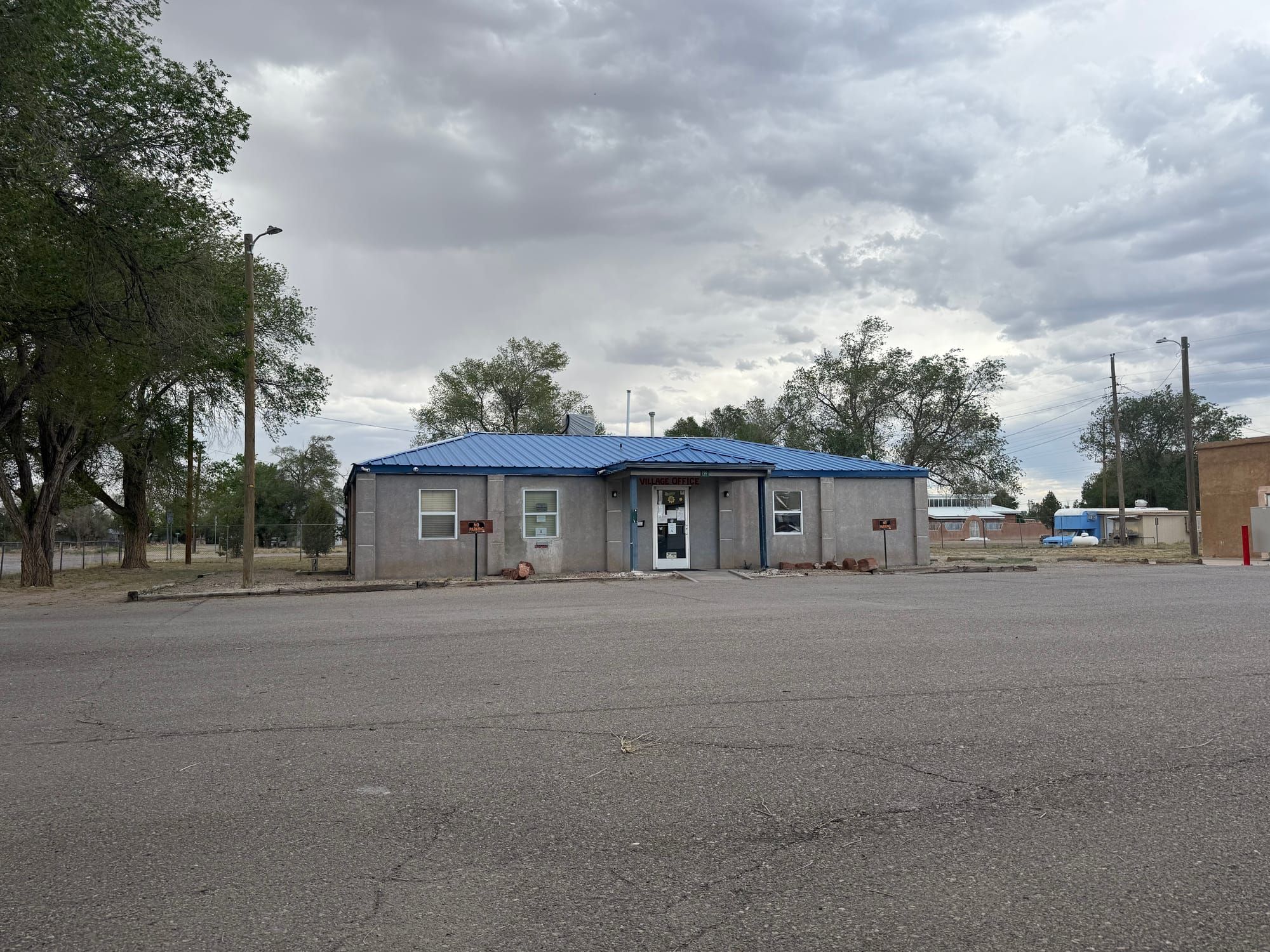
The council adopted Resolution 2026-04 under the governor's statewide drought order, and Torrance County health officials detailed naloxone distribution and school prevention programs weeks after the deadly Mountainair fentanyl exposure.
WILLARD — The Willard Village Council voted on Monday, June 8, 2026, to ban fireworks within the village for the upcoming holiday, adopting Resolution 2026-04 in response to a statewide drought, severe fire emergency, and executive order urging fireworks bans. The measure passed by unanimous roll-call vote of the three council members recorded on the action: Fay Chavez, Barbara Delgado, and Francesca Chavez. Council member Roberta Chavez was absent.
The vote places Willard alongside Estancia, Mountainair, and Edgewood, each of which has already adopted or is moving to adopt a similar ban. Mayor Edward Redondo framed the choice as a matter of avoiding catastrophe rather than spoiling a tradition.
"I don't want to be the one municipality that ends up having a fire because of fireworks," Redondo told the council, adding that a village that allowed a holiday blaze could "be made an example of."
Why the Ban Matters: Drought and Fire Danger
The local resolution follows Executive Order 2026-026, which Governor Michelle Lujan Grisham signed in May, declaring a statewide drought and severe fire conditions and urging counties and municipalities to enact fireworks bans and water-use restrictions. New Mexico recorded twice as many wildfires in the first four months of 2026 as it did over the same period in 2025, with 366 fires burning before the first of May, according to independent reporting on the governor's order.
Under New Mexico law, the state cannot ban fireworks on its own; the authority rests with local governments. Thus, the governor's order is framed as a request. Each council in the Estancia Valley has had to act on its own. Village Clerk Cassandra Garcia noted that the resolution before the council incorporated both the executive order and the underlying state statute.
County Health Council Brings Naloxone and Prevention Programs to Willard
The night's longest presentation came from the Partnership for a Healthy Torrance Community (PHTC), which serves as the county's designated health council. Certified prevention specialist Adrian Ortiz and PHTC Director Debbie Ortiz told the council that their organization works to close service gaps in a rural county where behavioral health and medical providers are scarce.
Ortiz tied PHTC's overdose-reversal work directly to the May 20 fentanyl exposure at a North Hanlon Avenue residence in Mountainair that killed three people and sickened 25, including four Mountainair EMS personnel, first reported by the Mountainair Dispatch on Wednesday, May 20, 2026. He said the tragedy had been "opening a lot of eyes," and reminded the council that PHTC provides free naloxone and free naloxone training to anyone who wants it.
Naloxone, distributed under brand names such as Narcan, is a medication that reverses opioid overdoses. Ortiz said PHTC distributed more than 934 naloxone kits within Torrance County over the past year and, as the distribution hub for the southeastern quadrant of the state, handed out several thousand more across the region.
Much of PHTC's work is aimed at young people. Ortiz, who also coordinates Torrance County Teen Court — a voluntary diversion program in which a peer jury, rather than a judge, sets consequences for first-time juvenile offenders who have admitted responsibility — described a slate of school-based programs the organization runs or is expanding across the county's three districts:
- A nicotine-prevention course called Smoke Screen, delivered to sixth graders in Estancia and Mountainair, with Moriarty pending.
- Teen Mental Health First Aid for ninth graders, already taught in Estancia and moving to Moriarty and then Mountainair.
- Youth Mental Health First Aid training for teachers, planned this year for Moriarty High School staff, which teaches adults to recognize when a student is struggling.
- A peer-to-peer messaging initiative in which students produced short prevention videos for social media.
Ortiz also told the council that PHTC is working to bring telehealth services into schools so that parents of students who need behavioral health care do not have to drive to Albuquerque, and that the New Mexico Department of Health mobile unit now visits Moriarty, Estancia, and Mountainair twice a month. Debbie Ortiz said the unit hopes to add Willard and Encino to its rotation, particularly for vaccine season and back-to-school immunizations, so that older residents are not forced to travel for shots.
Fact Check: The Vaping and Cannabis Numbers
The presenters illustrated the scale of the youth-nicotine problem with several figures. Ortiz said a single Juul pod delivers the nicotine of roughly 37 cigarettes and that some large disposable vape devices contain the equivalent of more than 500 cigarettes. He also contrasted the cannabis of a generation ago, which he put at 2 to 3 percent THC, with concentrated products he said can reach potencies near 90 percent today.
Those figures warrant context. The widely-cited equivalence, used by the manufacturer, the American Cancer Society, and a peer-reviewed review of nicotine delivery from a Juul pod, places a standard 5-percent pod closer to a single pack of cigarettes, or about 20 cigarettes, with individual studies estimating a range of 13 to 30. The figure of more than 500 cigarettes reflects the total nicotine content of the largest high-capacity disposable devices, a number that varies widely by brand and that overstates real-world exposure, because cigarettes deliver their nicotine far more efficiently than vapor does. On cannabis, Ortiz's basic point is sound but blends two different products: smoked cannabis flower has climbed from roughly 4 percent THC in the 1990s to a present-day average in the high teens to low twenties, while the 60-to-90-percent potencies he described apply to concentrates such as wax, oil, and shatter, which are consumed differently and in much smaller quantities.
One measure absent from the presentation was how common youth vaping actually is, which bears directly on the need for prevention programming. A 2020 study estimated that 14.2 percent of surveyed US youth had used a vaping device in the 30 days preceding the survey.
Solid Waste, Emergency Management, Water, and Natural Gas Updates
David Dean, Willard's former mayor and representative to the Estancia Valley Solid Waste Authority (EVSWA), reported that the authority spent much of its recent meeting in closed session working on preliminary budgets for the next fiscal year.
Dean also previewed an economic development effort tied to the next phase of wind farm construction in the area: a push to secure funding for a facility that would recycle decommissioned wind turbine blades into usable products. According to Dean, blade disposal is a genuine and growing problem nationwide because the blades are made of fiberglass composites engineered not to break down and are difficult to dispose of in landfills. Dean said the goal is to turn that liability into a local industry, recycling blades into materials such as lumber substitutes, picnic benches, flooring, and insulation, so that the economic benefit "sticks around" the areas where wind farms operate.
On the Local Emergency Planning Committee (LEPC), where Dean also represents Willard, he reported that the committee recently elected a new chair and is working to ease the workload currently carried by the county's emergency manager.
Council member Fay Chavez delivered the update for EMW Gas (EMW stands for Estancia-Moriarty-Willard), the regional natural gas association. She reported that the wholesale gas index stood at roughly 66 cents and that the association had 60 percent of its supply locked in as of Tuesday, May 26, 2026. The association has hired a contractor to complete work on its new building, though Chavez said EMW has not yet moved in due to ongoing legal matters.
Council member Francesca Chavez reported on the EMWT water board (EMWT stands for Estancia-Moriarty-Willard-Torrance County) which is weighing whether to take on the Melody Ranch development, a community near Edgewood whose residents lost reliable water service from their privately owned provider beginning roughly a year ago. The board faces a decision on whether to adopt a technical memo on the question, and, according to Chavez, the effort is being watched as a potential model for other counties and states.
Village Operations and Infrastructure
Routine department reports filled out the meeting. A maintenance worker told the council that the village's pump house was running well and that crews were testing a new pothole-patch material on one of Willard's higher-traffic roads, an experiment driven by the thin, roughly two-inch chip-seal surface that does not hold conventional patches well. Recent work on the village water tower included installation of a new stainless steel cable, chosen for its resistance to corrosion.
On the wastewater side, Clerk Cassandra Garcia reported that operator Mike Butler responded to a backflow problem and cleaned the lift station on Seventh Street, which she said had not been serviced in more than a decade. Crews cleared a clog in the line and reported that the system ran better afterward, with additional sites scheduled for pumping.
Garcia also briefed the council on a metering and billing discrepancy on one account, where recorded usage did not match actual consumption, and said she would need to research older records to resolve it. She confirmed that meters on certain inactive properties remain locked. In a separate matter, Garcia reported that an insurance claim arising from an injury at the community center had been denied, meaning the village does not face liability in that case.
County Services Coming to Willard
The most directly useful news for residents may have been Garcia's announcement that the Torrance County Clerk, Assessor, and Treasurer plan to open a temporary satellite office in Willard on Thursday, July 9, 2026. The clerk indicated the offices would use the village's old post office space and possibly a second location, and said a follow-up date in August 2026 is also under discussion.
Staff from the three county offices will help residents change their mailing addresses, pay bills, register to vote, and handle other county business without having to drive to Estancia. Garcia explained the practical stakes: many Willard residents who moved to new post office boxes never updated their addresses with the county, so property-tax notices and other official mail are being returned undelivered, leaving some residents unaware they are falling behind. Information about the July visit has been included in the village water bills.
Separately, Garcia said the village will soon begin a grant-funded project to build an ADA-compliant ramp at the council chambers. The county clerk's office purchased the materials, and crews expect to start work within about a week.