
PNM's Mid-State Transmission Line Draws Sharp Questions From Torrance County Landowners
At a virtual open house Monday night, residents from Loma Parda to the Manzano Land Grant pressed PNM and its development partner on easements, eminent domain, tribal consultation, and wildfire risk along a proposed 345-kV line through three counties.
Cui bono, cui prodest?
“Who benefits, who does it profit?”
— Judge Lucius Cassius Longinus Ravilla, cited by Roman lawyer and philosopher Cicero in Pro Roscio Amerino, 80 BCE.
Executive Summary
- PNM and Pattern Energy held a virtual open house Monday, August 24, 2026, on the proposed Mid-State Transmission Project, a 345-kV line running over 100 miles through Torrance, Socorro, and Valencia counties, drawing questions from residents on easements, eminent domain, tribal consultation, and wildfire risk.
- Loma Parda residents, including Linda Filippi and B Street Market owner Ann McCloud, objected to PNM widening the community's existing 50-foot right-of-way to 200 feet; Manzano Land Grant Association president Lenora Lovato Romero stated outright opposition to the project.
- PNM plans to file three applications with the New Mexico Public Regulation Commission (PRC) around mid-September to early October 2026: a right-of-way width determination, a location approval, and a certificate of public convenience and necessity.
- A PNM representative acknowledged the company would pursue eminent domain (forcible taking of property) against landowners in two circumstances: when an owner cannot be located, or when no agreement or alternate route is feasible after exploring options.
- The PNM Mid-State Transmission Project has a parallel in Pattern Energy's SunZia project, where the Tohono O'odham Nation and San Carlos Apache Tribe are suing federal agencies over inadequate tribal consultation in Arizona's San Pedro Valley; Pattern says Mid-State likely does not cross federal land, limiting Torrance County landowners to the PRC intervenor process rather than federal court.
- PNM said Mid-State would not be exempt from public safety power shutoffs if conditions warrant, though Torrance County is not currently on PNM's high fire risk list, and the company has not yet filed a PRC-reviewed wildfire mitigation plan for the route. PNM declined to provide a projection of power outages related to this for Torrance County.
- Questions remain unanswered about how much of the line's capacity will serve PNM's New Mexico ratepayers versus regional markets or data center load growth, and why Mid-State Transmission LLC withdrew its May 2026 application with the New Mexico Renewable Energy Transmission Authority (RETA).
Monday’s PNM Open House began with a hot mic, the drone of an air conditioner, and a Mountainair resident attending the meeting inadvertently broadcasting a weather forecast promising upcoming high temperatures. PNM representative Susanna Sollien attempted to mute the resident, who unmuted themself each time, blasting the forecast audio into the virtual meeting room, an unexpected frustration for the utility company representatives.
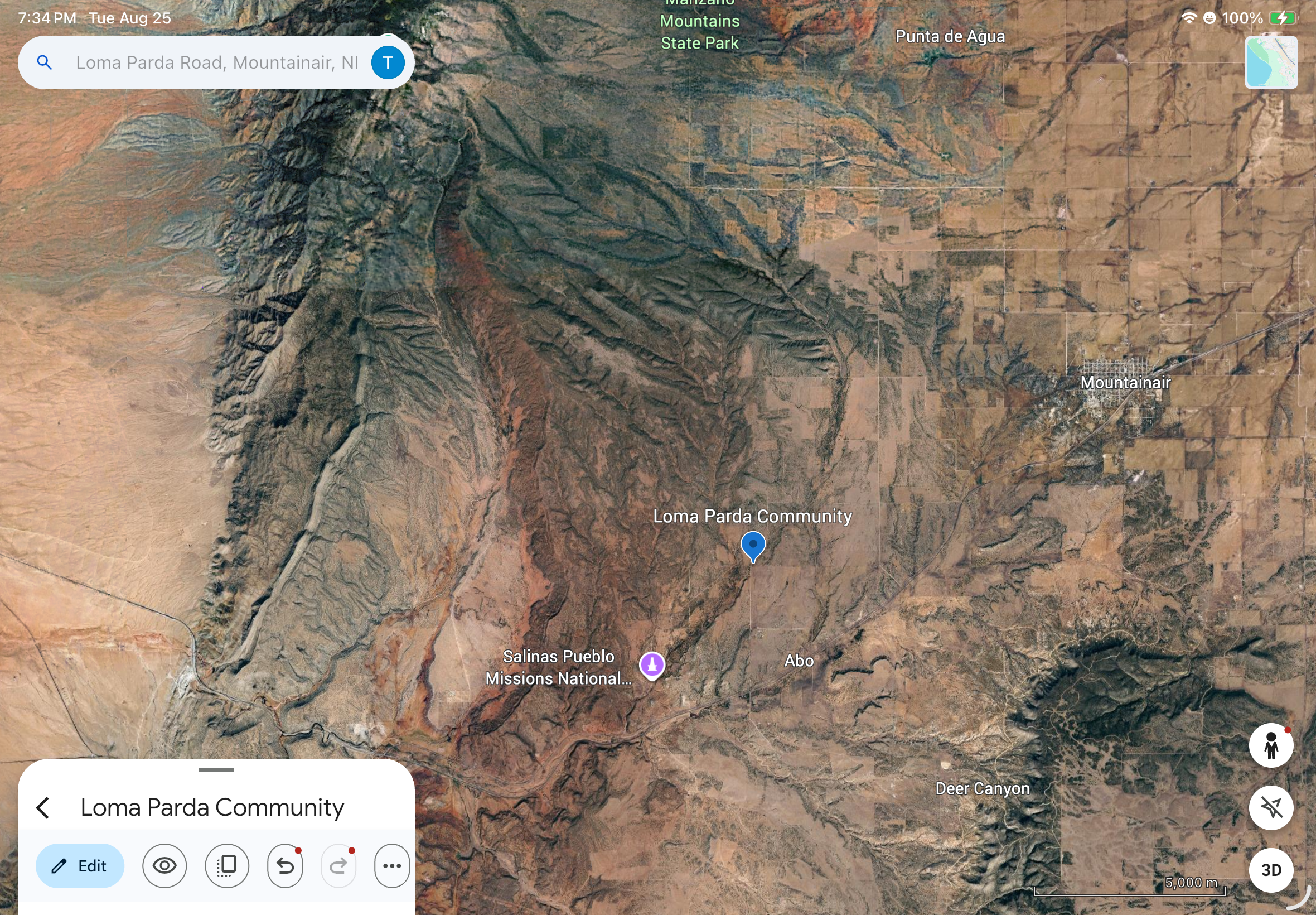
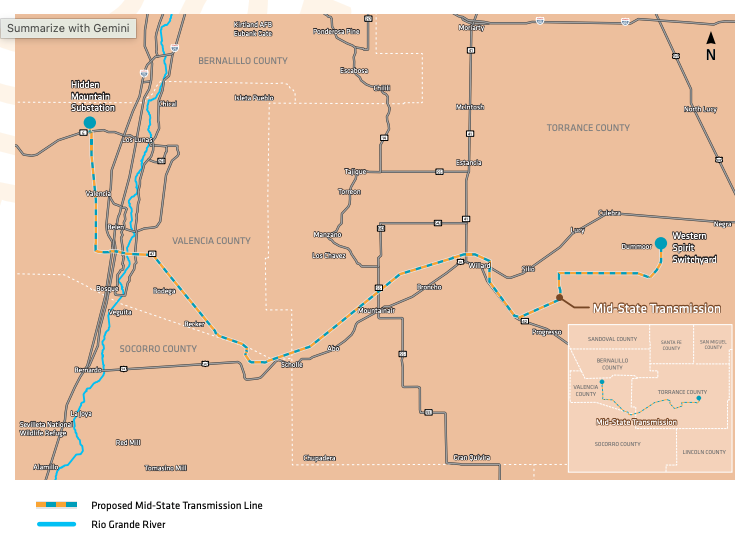
For residents of the Loma Parda community outside of Mountainair, in unincorporated Torrance County,(1) the map PNM put on the screen Monday night showed a problem of greater impact: a diagonal line cutting through their community. Linda Filippi, joined on the call by several of her Loma Parda neighbors, told PNM their existing right-of-way through the enclave is only 50 feet wide. The company's proposed Mid-State Transmission line would widen that easement to 200 feet. Ann McCloud, owner of the B Street Market and another Loma Parda resident on the call, asked PNM to instead follow the existing Sunwest line and turn north at Progresso, adding, "We do not want another line in Loma Parda." Lenora Lovato Romero, president of the Manzano Land Grant Association, was more direct. "I say NO to the PNM Project," she wrote in the meeting chat, later asking a question that summed up the room's underlying worry: if PNM gets 200 feet now, will it come back for more later?
Those were among the sharpest moments of a roughly two-hour virtual open house held by PNM and Pattern Energy on Monday evening, August 24, 2026, to gather public input on the proposed Mid-State Transmission Project. Close to 1,200 notification postcards went out to property owners ahead of the meeting, according to PNM stakeholder engagement lead Susanna Sollien, who moderated the session and introduced herself on the call as Susie. Attendance on the call appeared to peak at 41 participants.
The Potential Impact
The project’s impact goes well beyond the landowners the current route touches. A new high-voltage line of this size means new easements across private land, potential eminent domain proceedings for landowners who do not agree to sell or grant easements to PM, cultural review near sites sacred to multiple pueblos, potential impact on the migratory birds that rely on the Sevellita National Wildlife Refuge, and questions about wildfire risk in a county already under extreme drought.
What PNM is proposing
PNM's Mid-State Transmission Project is a new 345-kilovolt transmission line running more than 100 miles across Torrance, Socorro, and Valencia counties. Russell Brito, PNM's land use and permitting administrator, described the route as running from the Western Spirit Switchyard near Dunmoor in Torrance County, southwest to US-60, northwestward across the Rio Grande Valley, skirting the Isleta Pueblo and the Sevilleta NWR, to the Hidden Mountain Substation near Los Lunas in Valencia County. Much of the route follows or rebuilds PNM's existing 115-kV line rather than cutting an entirely new corridor, according to Adam Renz of Pattern Energy's development team, which is working on Mid-State on PNM's behalf. Residents disputed this description of the route, which Renz said was still tentative.
Project specifications PNM presented Monday night include the following.
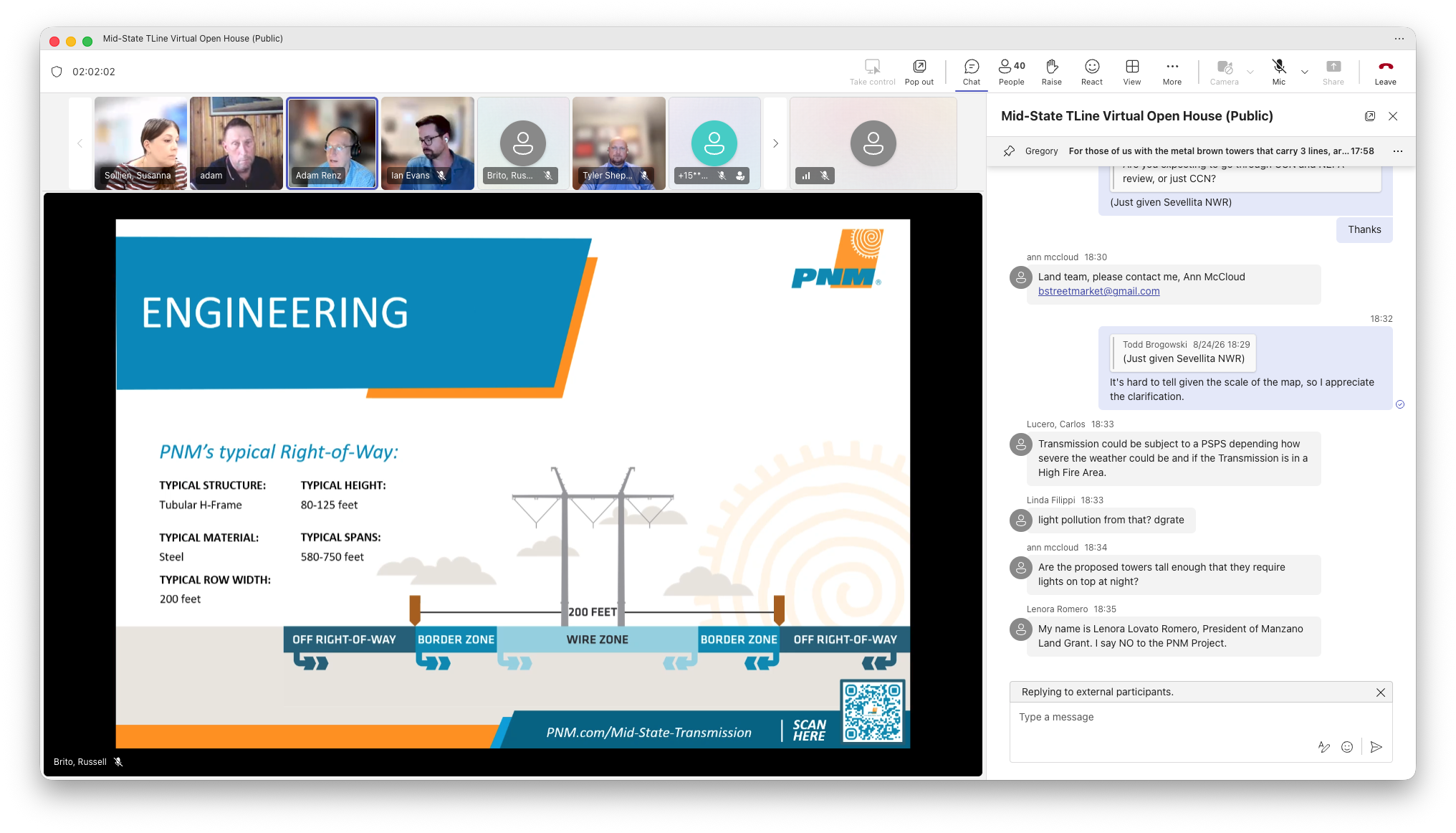
- Structure type: steel tubular H-frame towers, 80 to 125 feet tall depending on terrain
- Typical span between structures: 580 to 750 feet
- Right-of-way width: 200 feet, made up of a center "wire zone" flanked by two border zones
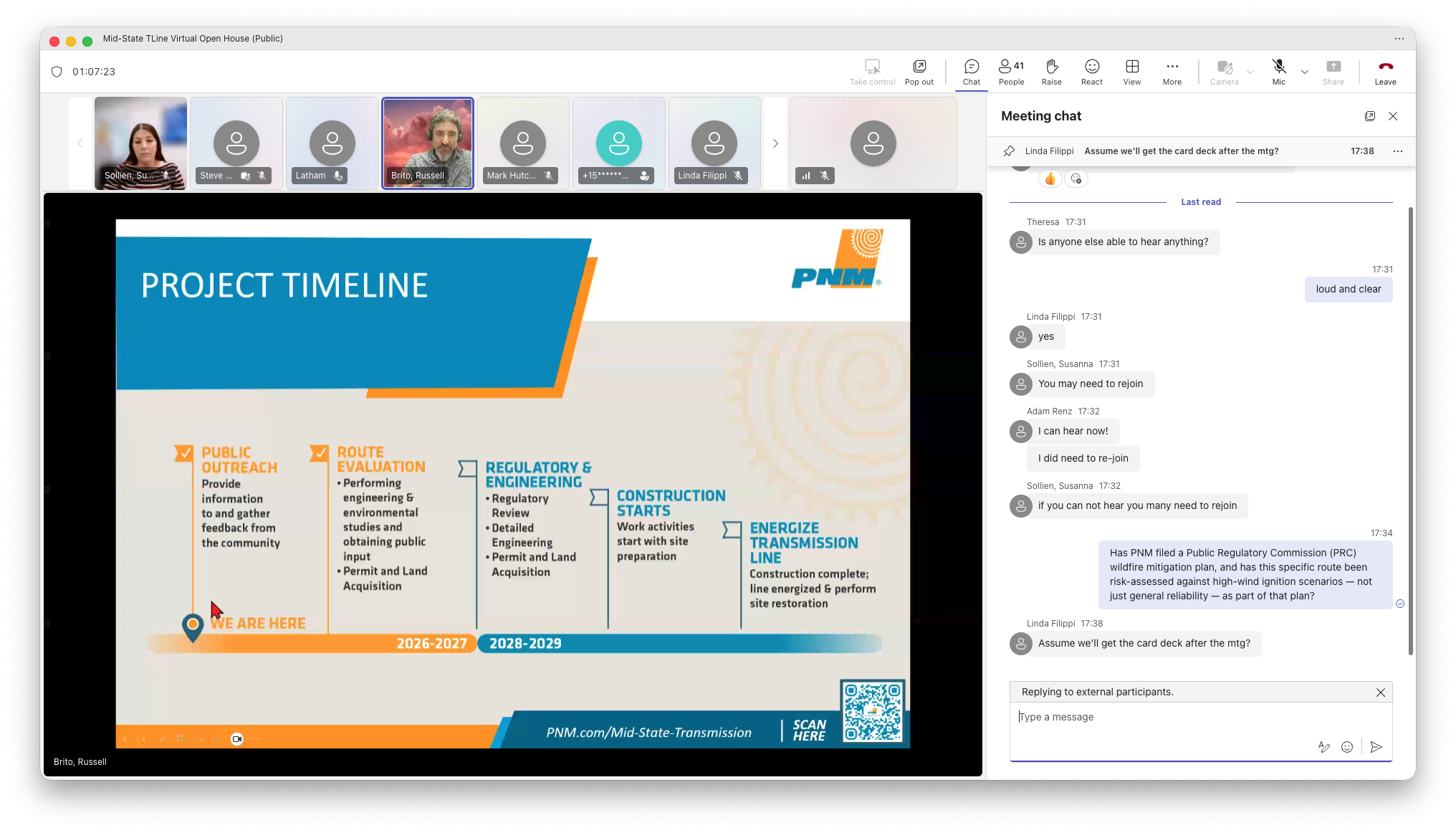
- Current phase: public outreach and route evaluation, expected to run through 2026 and into 2027
- Regulatory review and engineering: targeted for 2026 through 2028
- Construction start through energization: targeted for 2028 through 2029
- Contact: project hotline 833-910-3670, project email workinyourarea@pnm.com, project website pnm.com/mid-state-transmission
A PNM representative said the company expects to file three applications simultaneously with the New Mexico Public Regulation Commission (PRC):
- a right-of-way width determination,
- a location approval, and
- a certificate of public convenience and necessity, or CCN.
That filing is targeted for mid-September to early October 2026.
New Mexico law generally requires PRC approval of right-of-way width before a utility can build a transmission line requiring an easement wider than 100 feet. See NMSA § 62-9-3.2(A) (2026). A PNM representative told the Dispatch the company's 200-foot proposal reflects engineering design, not a separate legal standard, and that the PRC will make the final determination on the width once PNM's application is filed.
The company said it has not yet filed a wildfire mitigation plan with the PRC covering this specific route. That filing would come later, Renz stated during the meeting, once PNM's design work reaches what the company calls its 30 percent design stage.
The fight over Loma Parda and the route itself
Alan(2), one of the first residents to raise a question Monday, asked why the route runs through small, already-encumbered 40-acre lots rather than following the larger ranch land south of town that the SunZia transmission project used. Renz said PNM cannot collocate Mid-State with SunZia's corridor because Mid-State is a PNM project following PNM's own existing 115-kV line, while federal reliability rules from the North American Electric Reliability Corporation (NERC) and the Federal Energy Regulatory Commission (FERC) limit how transmission owners can share or stack lines on the same corridor. Brito claimed that those federal standards are a hard constraint on routing options.
For Loma Parda specifically, a PNM representative said the route through the neighborhood follows PNM's existing right-of-way rather than new land, which scores better in the company's routing analysis than cutting new corridor elsewhere. Renz repeatedly offered to connect Loma Parda residents directly with PNM's land team to walk the specific parcels affected, and Filippi asked whether PNM would meet with Loma Parda residents as a group. PNM would not commit to a group meeting - or to merely sharing the slide deck and recording from this meeting - on the call.
Mark Hutchings, who identified himself as an out-of-state property owner whose land runs 400 feet along the proposed route, raised a different concern: electromagnetic fields, or EMF, from the line. A PNM representative said the 200-foot right-of-way width is partly intended to let EMF levels dissipate to near-background levels by the edge of the easement, and that phasing the line's conductors also reduces EMF output. Hutchings also asked why PNM did not route the line along the Socorro-Valencia county line and up the back side of a nearby mesa, which he argued would affect fewer residents. A PNM representative said that question would need to go back to the routing team for a detailed answer.
Easements, compensation, and eminent domain
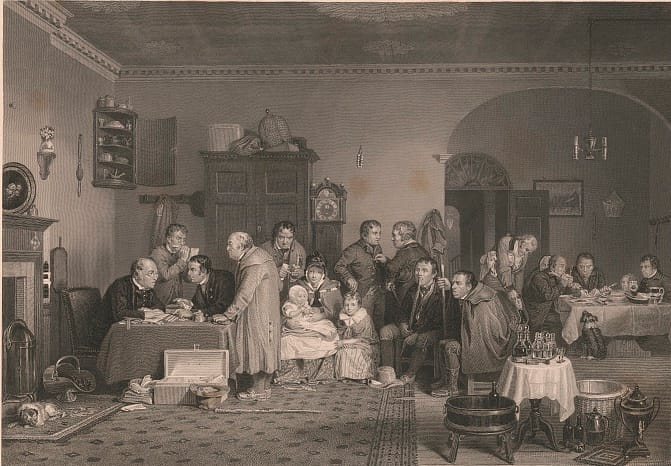
PNM has contracted Percheron LLC to acquire easements on its behalf, according to Tyler Shepard of Pattern Land Services, who leads Mid-State's land acquisition program. Compensation for easements is based on land use and location along the route, determined through a market study, Shepard said. Landowners will still be able to graze livestock and farm within the 200-foot right-of-way after construction, Shepard said, but structures will be forbidden.
Asked directly whether PNM intends to pursue eminent domain against landowners who refuse to grant an easement, a PNM representative said condemnation would be used in two circumstances: when a landowner cannot be located despite the company's efforts, or, after PNM has explored alternatives such as shifting the route around a specific parcel, when no landowner agreement and no feasible alternate route exist. The representative said PNM's land team looks for ways to jump a parcel or adjust the route before pursuing condemnation. While the company representatives avoided saying so directly, they acknowledged plans to use eminent domain against property owners if PNM intended to use their land.
Joe (last name unknown), a landowner on the call, asked how affected owners could formally submit a rejection of the proposed route. A PNM representative said that process runs through the PRC, where individuals and organizations can register as intervenors and file objections once PNM's applications are filed. Estevan (last name unknown) asked what happens if most landowners oppose the project. A PNM representative said that question would need to go back to the company's engineering and planning department for an answer.
Explainer: What Counts as "Public Use" When the Government Takes Your Land
Eminent domain is a legal doctrine that lets the government or a regulated utility take private property for a public purpose, even if the landowner does not want to give it up.
A 2005 U.S. Supreme Court case tested how far "public purpose" could stretch, and the backlash it produced still shapes how New Mexico, and PNM, can use that power today.
The Fifth Amendment allows the government to take private property as long as the use is public and the owner is paid what a court considers just compensation. That power, applied to the states through the Fourteenth Amendment and then to private companies addressing public matters, gives PNM a path to condemn an easement for the Mid-State Transmission line if a landowner will not sell one voluntarily. New Mexico's own Eminent Domain Code, NMSA §§ 42A-1-1 to 42A-1-33, sets the state procedure for that kind of taking.
For most of the doctrine's history, "public use" meant something fairly literal: land taken to build a road, a school, a courthouse, or infrastructure the public would directly use or that a regulated common carrier, a railroad, a pipeline, a power utility, would operate to serve the public. The early 20th Century Tennessee Valley Authority project is a well-known example where entire towns were taken to build hydroelectric power sources. That is the bucket PNM's potential condemnation authority for Mid-State falls into. PNM is a private, investor-owned company, but it can seek a right-of-way width determination and, if necessary, condemnation (while legal experts refer to eminent domain as a “taking,” public parlance has been to refer to a taking as condemnation, which falsely implies the sort of neglect or misuse of land that normally accompanies land condemnation) through the Public Regulation Commission precisely because it operates as a regulated public utility delivering electricity, not because it is a private business pursuing a private deal.
The Supreme Court began stretching that definition well before Kelo. In Berman v. Parker, 348 U.S. 26 (1954), the Court upheld condemning an entire blighted District of Columbia neighborhood for redevelopment, including a department store that was not itself blighted, reasoning that Congress could treat the area as a whole. In Hawaii Housing Authority v. Midkiff, 467 U.S. 229 (1984), the Court upheld a Hawaii law that condemned land from a small number of large landowners specifically to transfer it to the tenants who leased it, calling the breakup of a land oligopoly a legitimate public purpose. Both cases moved "public use" away from direct public use and toward something closer to public benefit or purpose.
Kelo v. City of New London
Kelo v. City of New London, 545 U.S. 469 (2005), pushed that logic further than either case had. In 1998, Pfizer built a $270 million research facility in New London, Connecticut. The city and the New London Development Corporation, a private entity working with the city, then condemned the adjoining Fort Trumbull neighborhood, including Susette Kelo's home and those of her neighbors, as part of an integrated redevelopment plan for a hotel, offices, condominiums, and a marina meant to capture the tax revenue and jobs the Pfizer facility was expected to generate nearby.
The Supreme Court ruled 5 to 4, on June 23, 2005, that the city's plan satisfied the public use requirement. Justice John Paul Stevens, writing for the majority, held in Kelo that economic development pursued through a comprehensive plan counts as a public use even when the condemned land is transferred to other private owners, so long as the taking is rationally related to a conceivable public benefit. Justice Sandra Day O'Connor's dissent, joined by Chief Justice William Rehnquist and Associate Justices Antonin Scalia and Clarence Thomas, warned the ruling effectively erased the line between public and private use of property, writing that the beneficiaries of takings like this one would tend to be whoever had the most influence in the political process, and that under the majority's reasoning, a Motel 6 could be condemned to make way for a Ritz-Carlton because the new use would generate more tax revenue. Justice Thomas wrote separately, arguing the Constitution's original meaning of "public use" required actual use by the public, not merely a public benefit.
The ruling produced one of the more unusual bipartisan backlashes in recent constitutional history. Within a few years, roughly forty states, New Mexico among them, passed new statutes or constitutional amendments specifically barring "economic development" as a valid justification for eminent domain, effectively overriding Kelo as a matter of state law even though the ruling remains the floor set by the federal Constitution. New Mexico's version, House Bill 393 (2007), stripped eminent domain authority out of the state's Metropolitan Redevelopment Code, eliminating the ability to condemn property on the basis of "blight" for private economic development, with a narrow carve-out for antiquated platting disputes in Rio Rancho. The Institute for Justice, the libertarian public-interest law firm that represented Suzette Kelo before the Supreme Court and tracks state-level protections, gives New Mexico's reform an A-minus grade, ranking it among the stronger state responses to Kelo nationally.
The epilogue in New London itself is part of why the case still gets cited: Kelo's neighborhood was demolished, and the Fort Trumbull site then sat mostly vacant for nearly two decades. Kelo’s home was moved out of the neighborhood, and that pink house still stands today.
Pfizer closed its nearby facility in 2009, just before its local tax abatement was set to expire. The hotel, office, and marina development the city had promised - the supposed public good - never materialized.
Where Mid-State fits, and Where it does not
New Mexico's post-Kelo reform was written narrowly, to close off "blight" and economic-development takings specifically. It left the older category, condemnation by a regulated public utility to build infrastructure the public actually uses, untouched. This category of eminent domain runs through New Mexico's state statutes and the Public Regulation Commission's width-determination and certificate process, NMSA § 62-9-3.2(A), the same statutory basis PNM cited at Monday's open house.
The political question animating Kelo's dissent - who actually captures the benefit of a taking - is close to the exact question Melissa T. and other residents pressed PNM on Monday night: how much of Mid-State serves PNM's own New Mexico ratepayers, and how much serves private equity firms like Blackstone.(3) PNM has not fully answered that question yet. For landowners along the route, the more realistic point of leverage is not a courtroom argument about the meaning of "public use." It is the New Mexico Public Regulation Commission's intervenor process, where affected landowners can formally object once PNM files its applications, expected as early as mid-September 2026.
Tribal consultation
Susie Sollian and other PNM representatives said the company has reached out to approximately 29 tribal entities associated with the historical area around the Salinas Pueblo Missions district. PNM and Pattern representatives said they met in person with Isleta Pueblo on August 24, 2026, and that the Mescalero Apache Tribe raised questions earlier that day that will factor into the project's cultural studies. The company said it plans to have cultural monitors present during field surveys, although it did not say it intends to have archaeologists present.
Pattern Energy, the company handling land acquisition and development on PNM's Mid-State line, is also the developer on SunZia, whose crossing of Arizona's San Pedro Valley is now the subject of a live federal lawsuit brought by the Tohono O'odham Nation and the San Carlos Apache Tribe.
Readers looking for a precedent for what Loma Parda residents and other Mid-State landowners are up against need merely look one state over: SunZia's roughly 550-mile transmission project, also developed by Pattern Energy, and its unresolved fight with tribal nations over a nearly 50-mile stretch through the San Pedro Valley in southern Arizona.
The San Pedro Valley dispute is not about easement width. It is about the survival of physical and cultural sites the Tohono O'odham Nation, San Carlos Apache Tribe, Hopi Tribe, and Zuni Tribe consider sacred, including ceremonial areas and burial grounds, in a valley researchers describe as one of the last ecologically intact landscapes in Arizona, second only to the Grand Canyon among unfragmented tracts in the state. Tribal officials say they raised the need for a full cultural landscape study, treating the valley as a single traditional cultural property rather than a scatter of individual archaeological sites, in consultations dating back to 2009. They say the Bureau of Land Management did not begin its formal review under the National Historic Preservation Act until after Pattern Energy's preferred route through the valley had already been selected.
Then-Tohono O'odham Chairman Verlon Jose called for an emergency halt to construction in October 2023. When that did not happen, the Tohono O'odham Nation and the San Carlos Apache Tribe sued the Bureau of Land Management, the Interior Department, and then-Interior Secretary Deb Haaland on January 17, 2024, joined by the nonprofits Archaeology Southwest and the Center for Biological Diversity. A federal judge dismissed the tribes' bid for an injunction in June 2024, and construction continued. The Ninth Circuit Court of Appeals reversed course on May 27, 2025, ruling unanimously that the case was timely and that the tribes had plausibly shown the BLM violated federal law by failing to adequately consult them and identify historic properties before approving the route. The plaintiffs filed a motion for summary judgment on March 13, 2026, asking the court to void BLM's construction authorizations outright. As of this writing, that motion is still pending before U.S. District Judge Jennifer Zipps, and construction in the valley has not stopped: developers had already cleared roughly 50 miles of roads and infrastructure by the time Archaeology Southwest last reported on the case.
For Mid-State, the parallel worth watching is not the sacred-sites claim itself, since Loma Parda's grievance is a land use and easement dispute, not a burial ground dispute (although there are archeologically-significant pictographs along the route). It is the shape of the underlying complaint: that a community's substantive input arrived only after the developer had already picked its preferred route, and that cheaper, less disruptive alternatives existed but were not seriously pursued. That is close to what Melissa T. and other Loma Parda-area residents argued at Monday's open house, and it is worth remembering PNM and Pattern used nearly identical language Monday night, that following existing right-of-way "scored better" in their routing analysis, to justify running the line through Loma Parda's existing 50-foot easement.
There is one difference that matters for what recourse is actually available here. SunZia's San Pedro Valley segment crosses federal Bureau of Land Management land, which is what gave the tribes a federal law to sue under and a federal court to sue in. Pattern's own environmental lead told Monday's open house that the company believes Mid-State does not cross federal land and is not expected to trigger a full federal environmental review. If Pattern is correct, it means Torrance County landowners do not have the same venue the Tohono O'odham and San Carlos Apache people had. Their primary avenue to formally object will run through the New Mexico Public Regulation Commission's intervenor process once PNM files its applications, not federal court.
The Mountainair Dispatch has requested records related to Mid-State's tribal consultation process from the New Mexico Indian Affairs Department and is awaiting the list of consulted tribes PNM's Susanna Sollien promised at Monday's meeting.
Wildfire risk and public safety power shutoffs
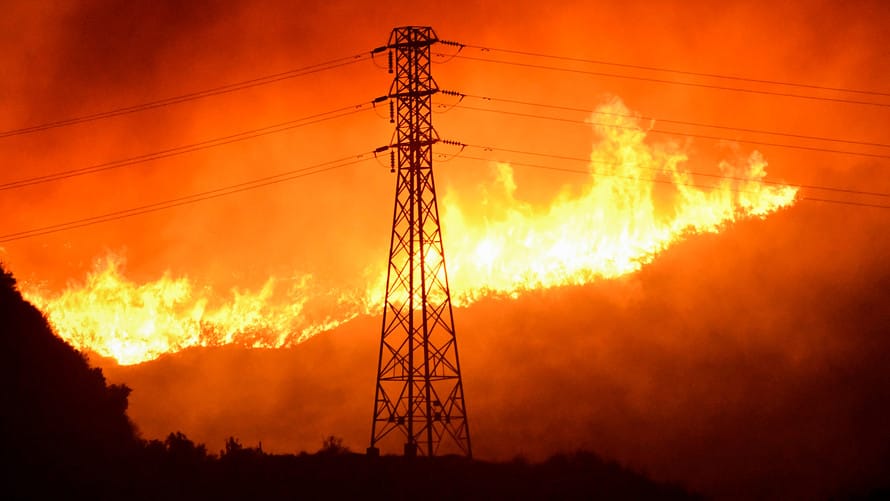
Brito told attendees that high-voltage transmission lines carry a comparatively low wildfire risk relative to lower, more exposed distribution lines. But Carlos Lucero, of PNM's government affairs team, said Mid-State would not be exempt from consideration for a public safety power shutoff, or PSPS, if a segment of the line falls within what PNM designates a high fire risk area and weather conditions, such as severe wind and low humidity, meet the company's shutoff criteria. As of PNM's current public list, Torrance County is not among the named high fire risk areas the company monitors, though PNM did not say Monday whether that designation could change once Mid-State is built. PNM declined to answer questions from the Mountainair Dispatch about whether it had projections for expected power shutoffs in Torrance County.
A PNM representative could not say Monday whether the company has prepared or filed a PRC-reviewed wildfire mitigation plan covering this route, claiming instead that such a filing would follow later design work.
Who pays and who benefits
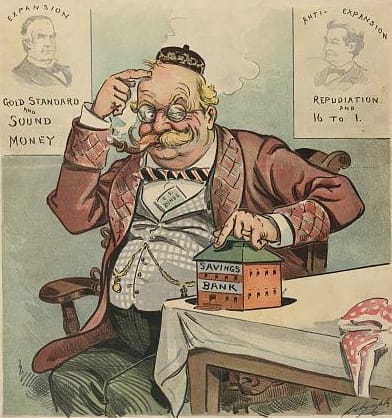
Several questions Monday night centered on who ultimately uses and pays for the line. Attendee Melissa T., who asked a series of detailed technical and regulatory questions throughout the meeting, asked how much of Mid-State's capacity would serve PNM's New Mexico customers versus regional or out-of-state markets. Renz said Mid-State is fundamentally a PNM project connecting two points in PNM's own system, and that it would not be accurate to characterize it as a private wind transmission project that does not benefit the state, though generation connecting through the nearby Western Spirit Switchyard would also use the line.
A PNM representative separately said the company could not answer on the call whether the project is intended in part to serve data center load growth.
Melissa T. also asked why Mid-State Transmission LLC withdrew its application for a memorandum of understanding with the New Mexico Renewable Energy Transmission Authority, or RETA, on or around May 26, 2026, and why RETA subsequently rescinded its conditional approval through Resolution 2026-007. Renz said PNM and Pattern determined a second three-party agreement with RETA, similar to the one used for the earlier Western Spirit project, was not necessary once PNM and Pattern already had a working structure of their own. A PNM representative noted that the route PNM selected - even though they claimed the route was still tentative - ultimately did not meet RETA's program requirements.
Asked by a resident identified in the chat only as "A" whether the project was ultimately about utility profit, a PNM representative and Lucero both said PNM's rate of return is set and approved by the PRC, and that the company cannot build or profit from a project the commission has not approved. While rate of return may be set by the PRC, net returns are determined by flexible values, to include cost decreases theoretically caused by Mid-State.
The Long Road Ahead
PNM representatives said they will post questions not answered Monday night, along with responses, to a frequently asked questions section of the project website. The company asked residents who submitted questions in the meeting chat to also resubmit them through the website with contact information, so PNM can follow up individually. Residents whose land may fall along the route were repeatedly encouraged to contact PNM's land team directly for a parcel-specific review, rather than relying on the high-level map PNM presented Monday, which they stressed was still tentative.
Footnotes
- For readers from outside of Torrance County, this is not the same Loma Parda known as the “Sodom on the Mora” that was located outside Fort Union, NM, and known for its 19th Century soldierly “revelries.”
- Alan did not provide his last name in the video-teleconferencing call. When last names are absent, or usernames are otherwise confusing, it will be noted.
- Blackstone is attempting a takeover of PNM, but should not be confused with BlackRock, a private equity firm that already has a sizeable stake (57.31 percent) in PNM. On July 29, 2026, Nicholas Gilmore of the Santa Fe New Mexican reported on financial irregularities surrounding Blackstone's purchase of stock in PNM. Gilmore wrote, "Blackstone’s retention of dividends from the electric utility’s stock — as described in a compliance report filed Monday — struck some as an egregious response to the state regulators’ recent chastisement of the companies. The PRC had issued $300,000 in regulatory fines and a directive to render the stock sale 'void and of no effect,' in accordance with state law."
The Mountainair Dispatch will continue following the Mid-State Transmission Project as it moves toward a filing with the New Mexico Public Regulation Commission, expected as early as mid-September 2026. Readers with documents, firsthand knowledge, or questions PNM did not address Monday can reach the Dispatch at todd@mountainairdispatch.com.