
New Details Emerge in Mountainair Fentanyl Incident That Killed Three, Exposed 25
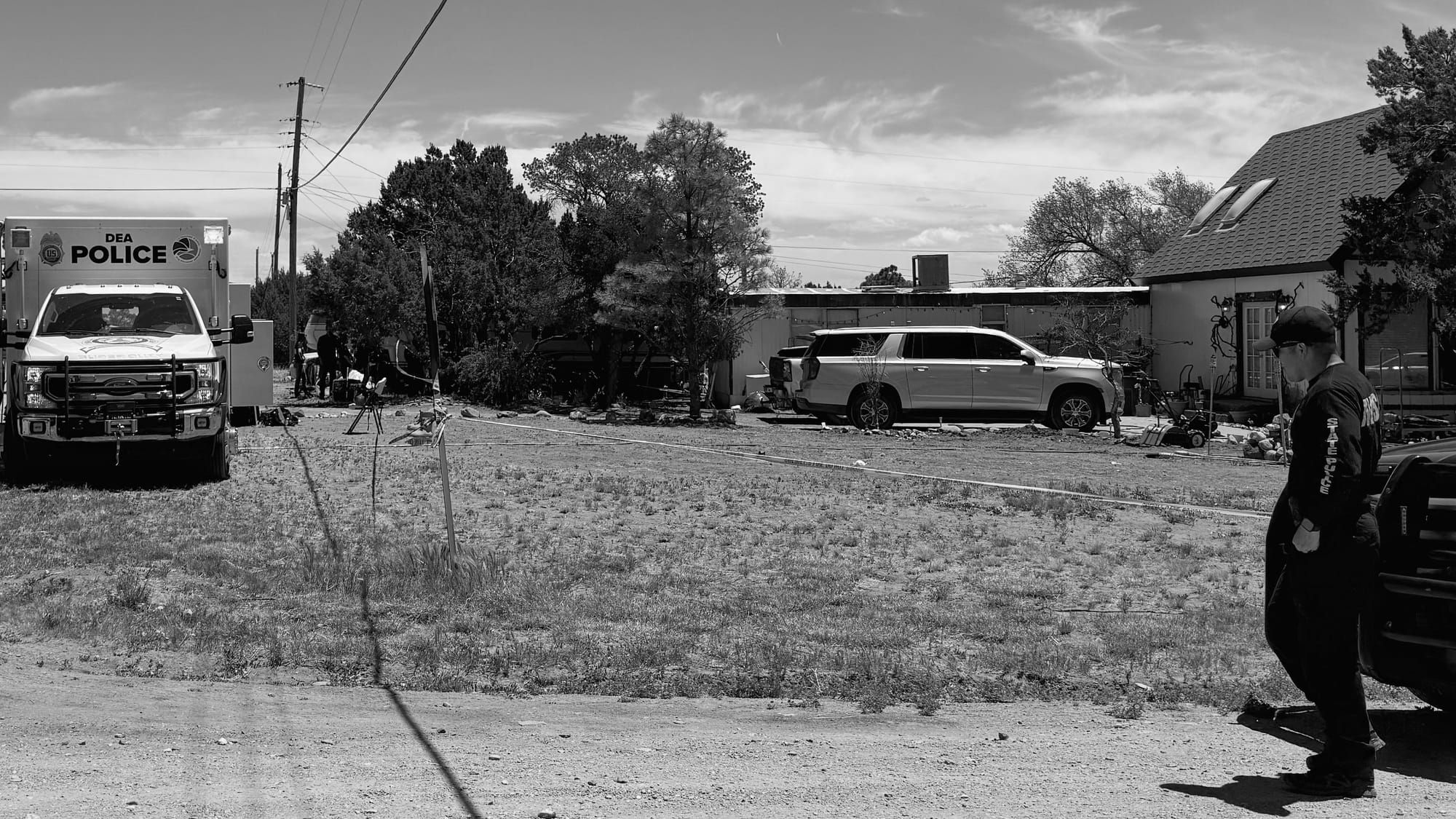
,Two of the deceased have been identified as Mika and Georgia Rascon. Twenty-five people were exposed in total, including Mountainair EMS personnel who entered the residence without hazardous materials gear.
A coworker called Torrance County Dispatch to check on a colleague who had not shown up to work on Wednesday morning, May 20, 2026, leading to the discovery that would end the lives of three people, sicken 25 others - including the first responders who arrived to help - and draw fire, EMS, and hazardous materials teams from Albuquerque before the end of the day.
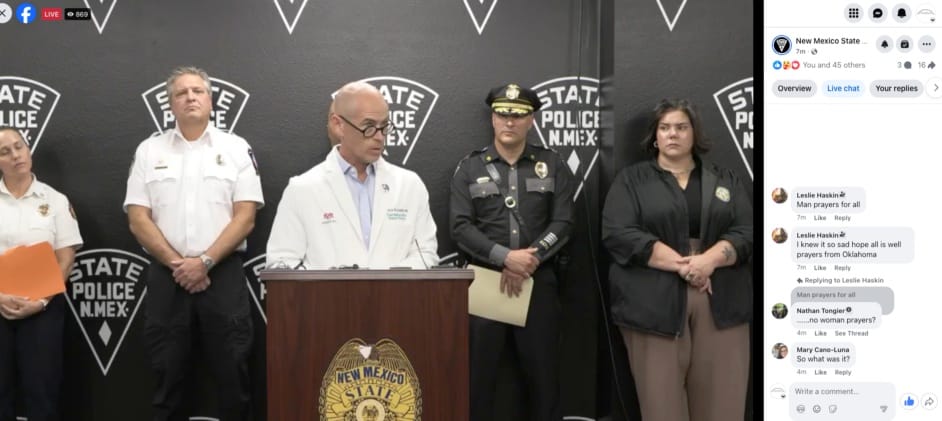
New Mexico State Police (NMSP) Chief Matt Broome and representatives from multiple responding agencies (Albuquerque Fire Department, Mountainair municipal government, Torrance County Fire Department, and University of New Mexico Hospital) held a press conference on Friday, May 22, 2026, to detail the incident and its aftermath, two days after a mass-casualty fentanyl exposure at 306 North Hanlon Avenue in Mountainair.
"This tragedy also highlights the dangers associated with illicit narcotics, especially fentanyl, and the horrible impact it has caused in communities across our state," Broome said. "Two days ago, our state suffered a tragedy, but it could have been much, much worse."
The New Timeline for the Incident Paints a Picture of Drug Exposure
At approximately 7:40 AM on Wednesday, May 20, 2026, Mountainair emergency personnel were dispatched to 306 North Hanlon for a reported suspected overdose. The call originated after a person failed to appear for work. When their employer could not reach them by phone, a coworker was sent to the residence and discovered multiple unresponsive individuals inside.
Mountainair EMS units arrived at 7:44 AM. Upon discovering multiple patients, EMS personnel requested backup. By 7:50 AM, Mountainair Town Clerk Mary Melton (AKA Mary Martinez) had contacted Mayor Peter Nieto, who responded to the scene. Nieto said he does not typically respond to EMS calls but did so because the symptom profile raised an early concern about natural gas or carbon monoxide exposure, a relevant consideration given that the Town of Mountainair operates its own natural gas system.
"Initially, responding personnel were advised to use caution because of the possibility of [a] gas-related incident while the residence was being evaluated," Nieto said.
Mountainair Public Works employee TJ Lopez arrived at approximately the same time as the mayor, shut off the gas supply to the residence, and conducted an initial inspection. No leak was detected. A second test and a review of meter readings - the meters had been read the day before, showing minimal usage - ruled out natural gas as a cause.
The first Mountainair EMS personnel to enter - EMS Chief Josh Lewis, Wanda Sullenger, and Megan Fernandez Burkeen - did not do so wearing hazardous materials protective equipment. The initial dispatch classification was a suspected overdose, with no indication of a HAZMAT situation.
"The individuals did see two victims that were inside, and they did grab them and pull them out into the fresh air, and then did start resuscitating on those two live patients," said Torrance County Fire Chief Gary Smith.
Shortly after entering the residence, first responders began exhibiting symptoms consistent with exposure to a hazardous substance. When asked whether the exposure occurred as a result of a gas or solid residue, Smith said that while the mechanism of exposure remains under investigation, all affected responders were on the fire and EMS side, and that none of the law enforcement personnel on scene experienced symptoms.
At approximately 8:12 AM, Mountainair Police Department Officer Jasmine Jaramillo arrived on scene. EMS personnel Toni Alguire arrived shortly after and remained until all patients and personnel had been transported. At 8:36 AM, Mountainair EMS and assisting agencies proceeded to the Mountainair Heliport for the medevac of one patient by helicopter. By 8:44 AM, Mountainair first responders contacted Torrance County dispatch, requesting additional units in response to the number of exposed personnel.
Four Mountainair EMS personnel were ultimately transported to UNM Hospital for evaluation. Three were released later that afternoon. EMS Chief Lewis remained overnight for observation and was released Thursday, May 21, 2026, at approximately 12:00 PM. As of Friday, May 22, all Mountainair EMS personnel have returned home and are recovering. (During the press conference, there was a dispute regarding the release of patients, but this information was independently confirmed with EMS Chief Josh Lewis and his family prior to the press conference.)
Mountainair Police Chief Paul Lucero arrived on scene at approximately 9:43 AM.
The Count: Three Dead, Dozens Treated
In total, 25 people were exposed during the incident. Of those, 20 have been treated and released. Two remain hospitalized at UNM Hospital as of Friday. Three are deceased.
Chief Broome identified two of the deceased as Mika Rascon, 51, and Georgia Rascon, 49. The identity of the third victim is being withheld pending confirmation by the New Mexico Office of the Medical Investigator (OMI). Official cause of death for all three has not been determined; that determination awaits OMI findings and autopsy results. One of the three died at UNM Hospital after being transported from the scene. As of the press conference, the remaining patient at UNM hospital has been described only as an individual having a connection to the residence.
UNM Hospital Chief Medical Officer Dr. Steve McLaughlin said the hospital received and treated 23 patients connected to the incident on Wednesday.
"Due to the great work of our teams and the partnership with these agencies, we were able to continue normal hospital operations during that time," McLaughlin said. "We're really grateful for the really positive outcomes for the majority of people that were involved in this event."
The Multi-Agency Response That Escalated from a Typical Overdose Call
Albuquerque Fire Chief Emily Jaramillo noted that the scale and nature of the incident triggered a regional mutual aid response that ultimately drew hazardous materials teams from Albuquerque. Additional personnel and equipment from the DEA's Clandestine Laboratory Enforcement Team came from Albuquerque and El Paso, Texas.
Shortly before noon on Wednesday, Jaramillo said, Albuquerque Fire Rescue (AFR) received a mutual aid request from Bernalillo County Fire Rescue and Torrance County to assist with a possible hazmat situation and decontamination. AFR deployed its hazmat coordinator, a battalion chief, a public information officer, and the hazmat task force from Station 13 — comprising Engine 13, Ladder 13, Rescue 13, and Squad 3 — for a total of 14 personnel. They arrived on scene at approximately 1:30 PM, at which point a unified command structure had already been established by NMSP and Bernalillo County Fire Rescue.
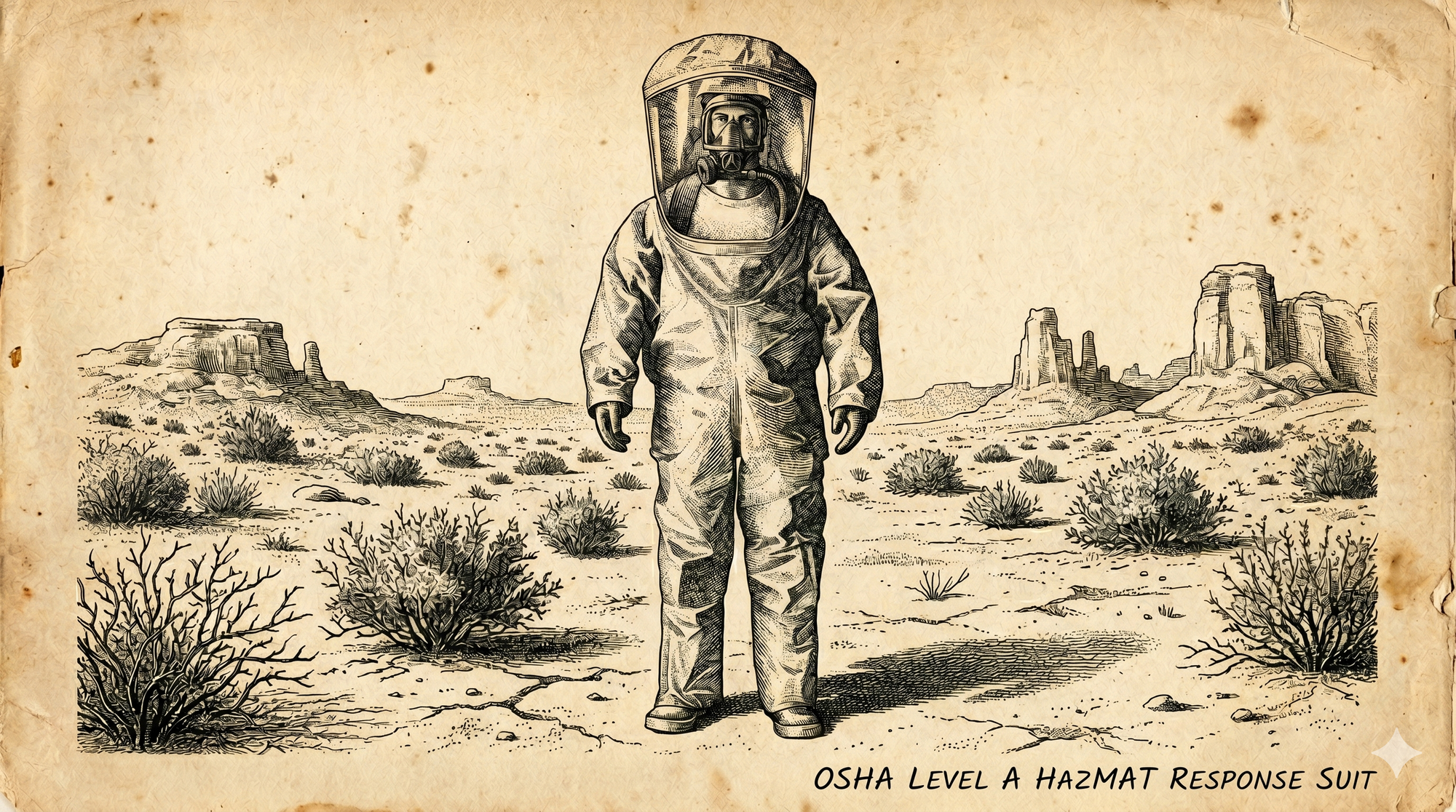
"Our HAZMAT technicians from Station 13 made entry into the scene in level A suits for the purposes of sampling unidentified substances, monitoring the atmosphere, and removal of one deceased individual from inside the residence," said AFR Chief Emily Jaramillo.
What Is a Level A Hazmat Suit — and Why Did Albuquerque and the DEA Use Them in Mountainair?
When Albuquerque Fire Rescue's hazmat team entered the Mountainair residence on Wednesday afternoon, they were wearing what is called a Level A suit — the highest level of personal protective equipment available to hazardous materials responders.
What It Is
A Level A suit is a fully encapsulating, vapor-tight garment made from multiple layers of chemically resistant material. Unlike the protective coveralls most people picture when they think of hazmat gear, a Level A suit completely seals around the wearer, including the breathing apparatus. Nothing gets in or out.
The self-contained breathing apparatus (SCBA) - the same type of air tank system firefighters use in burning buildings - is worn inside the Level A suit, not outside it. That means the wearer is breathing from their own air supply, completely isolated from whatever is in the surrounding environment.
The suit protects against vapors, gases, airborne particles, and chemical splashes that could be absorbed through skin, eyes, or the respiratory system. When the nature of a hazardous substance is unknown, or when concentrations are high enough to pose a risk through skin contact alone, Level A is what goes in first.
The Four Levels
The US Occupational Safety and Health Administration (OSHA) and the Environmental Protection Agency (EPA) define four levels of HAZMAT protection, from highest to lowest:
- Level A is fully encapsulating and vapor-tight. Used when the hazard is unknown or involves substances that can penetrate skin.
- Level B uses the same SCBA air supply but a non-encapsulating splash-protective suit. Used when the hazard is known and does not require full skin protection.
- Level C replaces the SCBA with an air-purifying respirator — a filter mask rather than a self-contained air supply. Used when the specific substance is known and concentrations are low.
- Level D is standard work clothing with minimal protective gear. Used when there is no respiratory hazard and minimal skin contact risk.
The Tradeoffs
Level A protection comes at a cost. The suits are heavy, hot, and drastically limit mobility and dexterity. A responder in a Level A suit is working against the suit's resistance with every movement. Communications are difficult. Vision is restricted to whatever the face shield allows, and sometimes that face shield is foggy.
Perhaps most significantly, air supply is finite. A HAZMAT technician in Level A gear typically has 30 to 45 minutes of working time before they must exit and decontaminate. Everything they do inside the hot zone has to be planned and executed within that window.
Donning and doffing - putting the suit on and taking it off - requires a trained partner and a specific sequence of steps. Removing it incorrectly risks contaminating the wearer or the surrounding area.
Why It Matters for the Mountainair Incident
The first Mountainair EMS personnel to arrive Wednesday morning entered the residence without protective gear of any kind. That was not negligence according to Torrance County Fire Chief Smith; the call came in as a suspected overdose, and standard overdose response does not involve HAZMAT equipment. By the time the nature of the substances present became clear, several first responders had already been exposed.
AFR maintains two HAZMAT task forces and responds regionally across New Mexico when requested.
AFR entry teams made entry into what was described by Chief Jaramillo as a "hot zone" at 3:06 PM. Operations concluded at 4:12 PM. Decontamination of both deceased individuals was performed so that OMI could transport the bodies. Bernalillo County Fire Rescue crews provided medical support for the entry teams.
Additional mutual aid came from the Estancia Fire Department, the Moriarty Fire Department, the Bernalillo County Fire Department, and the Sandoval County Fire Department. Federal agents from the FBI, the DEA, and Homeland Security Investigations (HSI) were also on scene as investigative partners. Chief Broome said their involvement is standard in incidents involving unknown substances where federal charges may ultimately be applicable.
Substances Identified
DEA laboratory analysis confirmed the presence of fentanyl, methamphetamine, and para-fluorofentanyl at the scene. Broome described para-fluorofentanyl — referred to at the press conference as "p4 fentanyl" — as a more illicit chemical variant of fentanyl.
All substances at the scene appear to have been in powder form, according to NMSP Public Information Officer Silver.
AFR's hazmat sampling identified two additional substances during entry team operations: nortriptyline, a tricyclic antidepressant, and aminophenyl sulfate, a compound used in cosmetics and hair dye products. Jaramillo cautioned that the presence of those substances does not mean they are causally connected to the deaths; that determination will depend on OMI findings and autopsies.
The Five Substances Found at the Scene - What They Are and What They Do
Not all substances identified at the Mountainair residence are necessarily connected to the deaths. Investigators and the Office of the Medical Investigator are still working to determine the causes of the deaths.
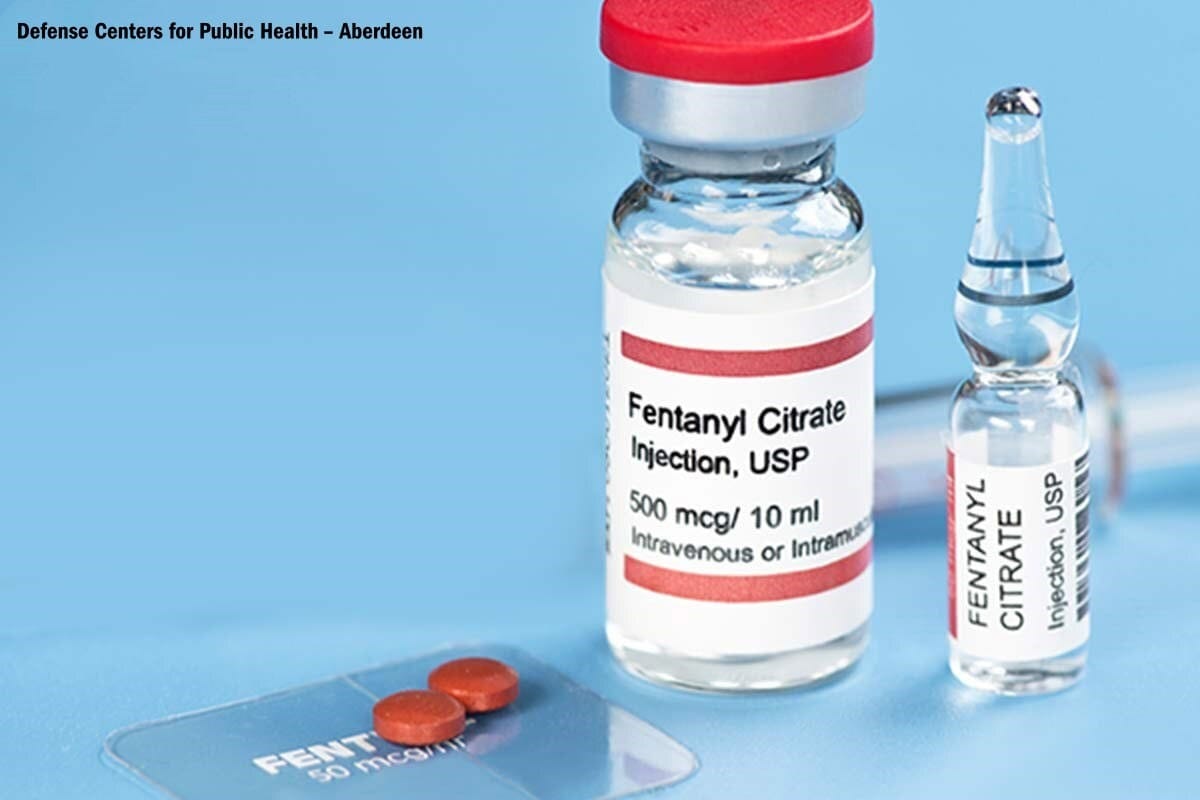
Fentanyl
Fentanyl is a synthetic opioid, a man-made drug that works on the same brain receptors as heroin and morphine, but is estimated to be 50 to 100 times more potent than morphine. A dose the size of a few grains of salt can kill an adult who has no opioid tolerance.
Legally, fentanyl is used in hospitals as an anesthetic and for managing severe pain. It is administered by injection, patch, or lozenge under close medical supervision. It also has legitimate veterinary applications. It is used in dogs, cats, and horses for surgical anesthesia and post-operative pain management, including in transdermal patch form.
Illicitly manufactured fentanyl is a different matter. It is produced in clandestine labs, often pressed into counterfeit pills designed to look like prescription medications, or mixed - sometimes unknowingly - into other drugs like heroin, cocaine, or methamphetamine. It is this version that has driven tens of thousands of overdose deaths nationally in recent years.
When someone overdoses on fentanyl, breathing slows and eventually stops. The antidote is naloxone, sold under the brand name Narcan, which is available without a prescription at most New Mexico pharmacies and can reverse an overdose if administered in time.
Para-Fluorofentanyl
Para-fluorofentanyl - sometimes written as 4-fluorofentanyl - is a chemical cousin of fentanyl. The difference is a single fluorine atom added to the fentanyl molecule. That small change is enough to make it a technically distinct compound, which has historically allowed illicit manufacturers to temporarily sidestep drug scheduling laws before authorities update the controlled substances list.
Para-fluorofentanyl has no approved medical use in the United States. It is produced exclusively in illicit settings and is considered at least as dangerous as fentanyl, and potentially more so.
Methamphetamine
Methamphetamine is a powerful central nervous system stimulant. Where opioids slow the body down, methamphetamine does the opposite — it floods the brain with dopamine, producing intense euphoria, increased energy, and suppressed appetite. The effects are short-lived and followed by a severe crash, which drives compulsive use.
Methamphetamine does have a narrow, rarely used legal application: a prescription formulation called Desoxyn is approved in the United States for treating severe attention deficit hyperactivity disorder (ADHD) and short-term obesity management. In practice, it is almost never prescribed. Its presence at a scene in powder form is consistent with illicit production or distribution.
Long-term methamphetamine use causes severe physical and cognitive damage, including tooth decay, skin lesions, cardiovascular disease, and significant mental health deterioration. It is a central driver of the opioid and stimulant crisis affecting rural communities across New Mexico.
Nortriptyline
Nortriptyline is a prescription antidepressant in a class of drugs called tricyclic antidepressants (TCAs), developed in the 1960s. It is prescribed today for depression, anxiety disorders, neuropathic pain, and as an aid in smoking cessation. It is a legal, widely available medication that many people take safely under medical supervision.
It is not considered a drug of abuse in the traditional sense. People do not typically take it recreationally. However, in high doses, nortriptyline can be extremely dangerous, causing irregular heart rhythms, seizures, and cardiac arrest. Its presence at the scene may have an entirely ordinary explanation, such as a resident's personal prescription.
Nortriptyline and related tricyclic antidepressants are also used in veterinary behavioral medicine - primarily in dogs and cats - to treat anxiety, compulsive disorders, and separation anxiety, though other medications in the same drug class are more commonly prescribed for animals.
Aminophenyl Sulfate
Aminophenyl sulfate - also written as p-aminophenol sulfate or 4-aminophenol sulfate - is an industrial and pharmaceutical compound with several legitimate, unrelated uses.
It is best known as a component in oxidative hair dye, where it acts as a coupling agent to produce color. It also serves as a chemical intermediate in pharmaceutical manufacturing. It is used in the production of acetaminophen, the common over-the-counter pain reliever sold as Tylenol. Historically, it has been used as a developing agent in film photography. It also appears in rubber manufacturing and as a reagent in laboratory chemistry.
It is not a controlled substance, not a drug of abuse, and has no known recreational use. Its presence at the scene may be entirely unrelated to the deaths. Albuquerque Fire Rescue Chief Emily Jaramillo, whose hazmat team identified the substance during on-scene sampling, specifically noted that it appears connected to a cosmetic or hair dye type of product and cautioned against drawing conclusions about its role pending the full investigation.
If you believe someone may be experiencing an opioid overdose, call 911 immediately. Administer naloxone (Narcan) if available - it is available without a prescription at many New Mexico pharmacies.
According to NMSP Chief Broome and AFD Chief Jaramillo, there is no evidence at this time that the substances were manufactured at the residence, though that remains part of the active investigation.
How first responders were exposed, whether through inhalation, dermal contact, or another route, is also still under investigation. Smith noted that all symptomatic individuals were fire and EMS personnel who had direct physical contact with patients, not law enforcement on the scene.
The residence remains under investigation. A cleanup crew was expected to arrive Friday afternoon, Broome said. Whether the owners or the remaining occupant of the property will be permitted to return is still under review.
What Is Fentanyl — and Why a Trace Amount Is Dangerous
Dr. McLaughlin explained that fentanyl is a synthetic opioid that is estimated to be 50 to 100 times more potent than morphine and requires only a microscopic quantity to cause a fatal overdose. Para-fluorofentanyl is a chemical analog - a variation on the fentanyl molecule - that is produced illicitly and carries similar or potentially greater overdose risks.
McLaughlin described the physiological course of fentanyl exposure: a person first becomes drowsy, then loses consciousness, then experiences progressive slowing of breathing that can lead to respiratory arrest. He said fentanyl and its analogs are most dangerous when ingested, inhaled, or injected, and that skin contact alone is uncommon as a cause of serious symptoms, though the exact exposure pathway for the first responders in this case has not been determined.
"The tiniest possible dose of fentanyl can cause serious symptoms in an exposed individual," McLaughlin said.
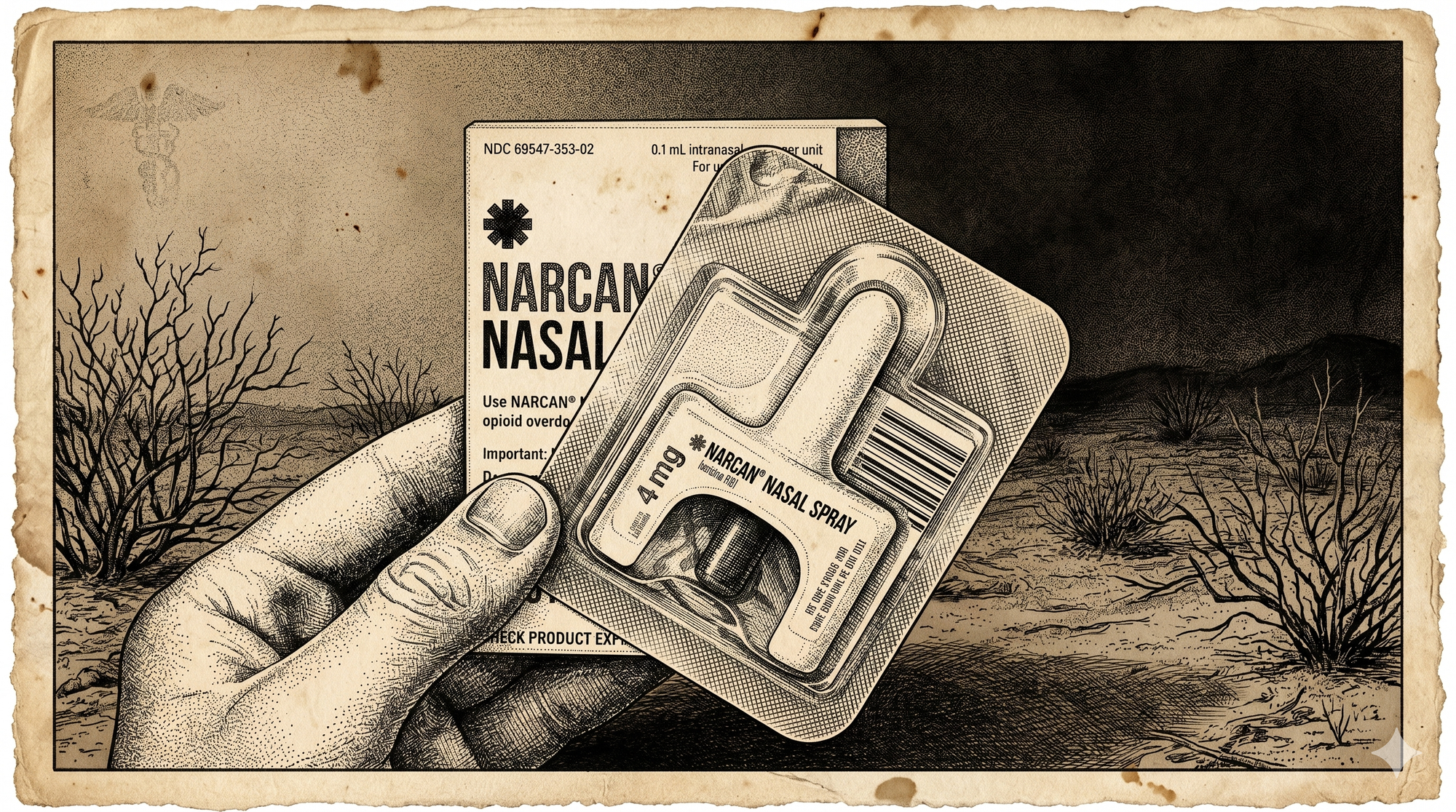
He urged any member of the public who encounters a person showing signs of opioid toxicity to call 911 immediately and to administer naloxone — sold under the brand name Narcan — if available. Naloxone is an opioid reversal agent that is available without a prescription at most pharmacies in New Mexico and via mail order through the New Mexico Department of Health.
"We want the public to get that message, so that people feel empowered and have the knowledge about how to respond in these situations," McLaughlin said.
Looking Ahead
Torrance County Fire Chief Gary Smith said his department will conduct multiple debriefings over the coming weeks to assess the response and identify areas for improvement.
"We are only as good as our last call," Smith said. "We need to reevaluate every call, and how we respond might change after we do our [after-action reviews]."
Mayor Nieto expressed condolences to the families of those who died and thanked the agencies that responded.
"We are grateful for every agency that assisted," Nieto said.
Chief Broome said NMSP will not discuss specific evidence or potential criminal charges while the investigation is ongoing. The FBI and HSI remain involved as federal partners. The DEA was not present at the press conference, and no comment was made regarding its continued involvement in the matter. The Torrance County Sheriff's Office, which had initially claimed responsibility for the investigation, was not present at the press conference, and no mention of the agency was made. Charges remain a possibility pending the outcome of the investigation.
The Mountainair Dispatch will continue covering this story as OMI findings are released, the investigation develops, and additional information becomes available.